Showing posts with label wonder woman. Show all posts

Thursday, September 13, 2018

Wonder Woman: War of the Gods

Wonder Woman: War of the Gods (1991/ Collected 2017): written by George Perez; illustrated by George Perez, Jill Thompson, Cynthia Martin, Russell Braun, Romeo Tanghal, and others: War of the Gods was DC Comics' company-wide crossover for 1991 and one of its best from the first decade of company-wide crossovers that kicked off with 1985's Crisis on Infinite Earths. And as with Crisis, writer-artist George Perez is a major component.

As 1991 was the 50th anniversary of the first appearance of Wonder Woman, War of the Gods also served as a de facto anniversary celebration, centered as it was upon Wonder Woman, the Amazons, WW-foe Circe, and the Amazon island of Themyscira (aka Paradise Island). 

George Perez had been writing and/or illustrating Wonder Woman ever since her series rebooted post-Crisis in 1986. War of the Gods would also serve as a farewell to Perez -- his problems with DC's low-key anniversary acknowledgement of WW's 50th helped cause him to leave Wonder Woman with the issue that served as an epilogue to War of the Gods.

A lot of people help out on the artwork here, including two pioneering female artists when it came to mainstream superhero comics -- Cynthia Martin and Jill Thompson. They're very good. They also follow Perez's lead in giving Wonder Woman a realistic physique. Which is to say, she's not top-heavy. In mainstream superhero comics, that's something of a Mission Statement then and now. You can sort of chart sexism in superhero comics by the size of Wonder Woman's bust.

War of the Gods sees the witch Circe incite a war among various pantheons of gods. Initially, this involves the Greek and Roman gods. Initially, the similarity of the Greek and Roman gods also creates confusion as to who is who and why and what and what-have-you. Then other gods from the Hindu and Egyptian and Babylonian and assorted other pantheons start wreaking havoc on Earth. It's a good thing Earth has superheroes! If you've ever wanted to see Aquaman defeat the Babylonian demon Tiamat, this is the comic for you.

Wonder Woman leads the battle against Circe, with Earth's other heroes taking their cues from her. Perez and the other artists do a solid and often inspired job of depicting all these mythological battles and weird dimensionnal realms, including another take on Perez's M.C. Escher-influenced Olympus, the war-god Ares' realm of Areopagus, and the cosmic burial ground of of the dead Titan Cronus.

Still, this is a company-wide crossover, so many other heroes are involved. And even with the 'company-wide' part trimmed to just the miniseries and issues of Wonder Woman, things get pretty crowded. Omitting all the other issues that tied into the War of the Gods sometimes means 'not crowded enough,' though. Some events that clearly occupied entire issues of Superman or Justice League get only passing mention in this volume. 

I suppose there may some day be a War of the Gods Omnibus edition that compiles all the stories. For now, we're left wondering why, to cite one example, Firestorm is given such a major introduction in this volume before going on to do, um, nothing. I assume he had a pivotal role in one of the tie-ins. Or maybe not. Thanks for coming out, Firestorm!

There's some fairly typical Continuity Wankiness here, especially when it comes to Shazam. Why do the names that make up the acronym Shazam come from Greek, Roman, and Biblical figures? Well, now you will know! 

And the answer isn't 'Because they start with the right letters?' No explanation is given for Mary Marvel's different set of gods and legends, but I'm not sure Mary Marvel was in DC continuity in 1991. Hoo ha! 

Three characters from Crisis on Infinite Earths -- Harbinger, Pariah, and Lady Quark -- also make appearances here so as to tie in the universe-shaking events to the multiverse-shaking events of that series. Hey, it's always nice to see Lady Quark and her weird costume.

In all this is an enjoyable, sometimes choppy volume, that choppiness coming from the missing tie-in issues. I suppose if you're not going to reprint all the issues for the sake of brevity, you could always insert text pages explaining, 'Meanwhile, in Superman this happened, and in JLA that...'. But it's nice to see Wonder Woman figure so prominently in a crossover. Recommended.

Wednesday, September 12, 2018

Wonder Woman and the Justice League of America

Wonder Woman and the Justice League America Volume 1 (1993-94/ Collected 2017): written by Dan Vado, Chuck Dixon, and Bill Loebs; illustrated by Kevin West, Mike Collins, Chris Hunter, Greg LaRocque, Rick Burchett, Ken Branch, and others:  

DC repackaged these early 1990's Justice League America issues to put Wonder Woman's name above the title. Which is fine. It's an undercollected era of DC's super-group, so whatever helps it sell!

Wonder Woman takes over as leader a few months after the Death of Superman event removed the Man of Steel from the group. The surviving members, most of whom took a beating at the hands of Superman-killer Doomsday, are still pretty traumatized. Booster Gold needs new armor, his 25th-century duds having been shredded by Doomsday. Blue Beetle is still recovering from his own physical and emotional trauma. Fire still hasn't regained her fire powers. Former Green Lantern Guy Gardner, now wielding Sinestro's yellow power ring, is unusually pissy even for him.

The group gets asked by the United Nations to intervene in an African military coup. There may be no super-villains involved in the coup, but that rapidly changes. The Extremists show up. Or maybe The New Extremists. A sort-of generic group of super-villains, they're working for a sinister mastermind who won't be revealed until the next collected volume.

The JLA makes its way through several problems, from alien fugitives to problems in member Ice's frozen Northern kingdom. The Extremists and the political problems in Ice's homeland are both part of a larger strategy from a mystery figure. Guy Gardner's ultra-belligerence is not -- it's something from his own book crossing over into JLA. We also get a chapter from perhaps DC's least-loved title-wide crossover of the 1980's and 1990's, Bloodlines.

New writer Dan Vado keeps things chugging along with what is really a Marvel-level of angst and superheroic sorrow. New regular artist Kevin West is certainly a competent penciler, though he's outshined in a one-off appearance by Mike Collins. The JLA was never really an 'Art book' -- it's hard enough to keep all the costumes straight, I think! Overall, it's a solid slice of 1990's superheroics, complete with some truly hair-raising costumes and hair-styles. Recommended.


Wonder Woman and the Justice League America Volume 2 (1994/ Collected 2017): written by Dan Vado, Gerard Jones, and Mark Waid; illustrated by Marc Campos, Chuck Wojtkiewicz, Sal Velluto, Ken Branch, and others: 

Wonder Woman leads the Justice League America against the somewhat wiggy Cult of the Machine. But that's just the warm-up for the six-part crossover with Justice League Europe and Justice League Task Force as the three Leagues must join forces in the Day of Judgment story-line to save the Earth from the Overmaster and his Cadre.

Primary JLA penciler Marc Campos does a decent job throughout, though he's occasionally overwhelmed by a desire to do unusual page lay-outs that compromise the reader's ability to understand what the Hell is going on. But he does seem very energetic and enthusiastic. Because the book crosses over with two other titles, the artists change between Day of Judgment chapters, which can be a bit discombobulating.

Wonder Woman does her best as team leader. There's a sly visual nod to Watchmen at one point which I like a lot. Booster Gold screws up. Blue Beetle gets off the mat. Vandal Savage gets to be non-threatening for once. Co-writer on Day of Judgment Mark Waid seems to do a practice run for the Quintumvirate of Kingdom Come with a trio of immortals here debating what to do about Earth's potentially dire fate. 

Overmaster never comes into complete focus as a villain. He's like Galactus if Galactus were into eugenics rather than planet-eating. Superman and Batman are completely absent from the shenanigans because of events over in their own books. They should probably have appeared for at least a cameo, given the stakes, but editors can be really, really fussy about appearances of their characters in the books of other editors. This is how one sometimes ends up with a Justice League or an Avengers that would have problems defeating the Mormon Tabernacle Choir. Oh, well.

One of the period-specific curiosities here (well, other than a book called Justice League Task Force, a name it shared with a video game of the time) are repeated references to Wonder Woman's loss of the ability to fly. Clearly this happened in her own book. We're told again and again that she can no longer fly, but never is it explained further. Get this woman an Invisible Jet stat! Recommended.
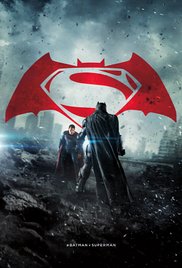
Saturday, June 16, 2018

The Dark Knight III: The Master Race

SUPER BEST FRIENDS AGAIN !!!

The Dark Knight III: The Master Race (2016-2017/ Collected 2017): written by Brian Azzarello and Frank Miller; illustrated by Andy Kubert, Klaus Janson, Frank Miller, Eduardo Risso, John Romita Jr., Brad Anderson, and Alex Sinclair: Rumours are that Frank Miller had very little to do with the writing of this follow-up to The Dark Knight Returns (1986-87) and The Dark Knight Strikes Again (2001-2002). His art duties involve the inking of a few covers and drawing inter-chapter 'mini-comics' that contextualize portions of the main story. 

The main story is credited as 'Story by Frank Miller and Brian Azzarello.' Penciller Andy Kubert and inker Klaus Janson (inker of The Dark Knight Returns) do a fair job of maintaining their own styles while also paying homage to Miller's art style circa 1986. Miller's art in the mini-comics is sort of awful at points, reaching a nadir when he hinges the Atom's legs backwards, having apparently forgotten how knees work.

Taking up three years after The Dark Knight Strikes Again and six years after The Dark Knight Returns, DKIII again features aging versions of DC's major superheroes in a near-dystopic future. Events conspire to team up Batman, Superman, Wonder Woman, and many others to oppose a new global threat. One of the signs that Miller may not be writing much of the book is that Superman comes across pretty well for once, even saving Batman's life at one point. It's a shocker. 

Azzarello, if he scripted most of this, supplies lots of tough-guy and tough-girl introspection alongside all the fist fights and explodey-ness. Kubert and Janson give us suitably over-sized heroes and villains, innocents and grotesques and all that jazz. The whole thing goes down smoothly and way, way faster than the original The Dark Knight Returns and its intermittently densely packed pages of dialogue and exposition set off by full-page spreads. There's still satire here, particularly of both Obama and Trump, but it's pretty boilerplate stuff. 

Azzarello, not really known for writing superhero punch-ups, has written a giant superhero punch-up. It's enjoyable, certainly far more enjoyable than the clumsy and misanthropic Dark Knight Strikes Again, though no touch on the original. Miller's far-right politics seems to manifest in the idea of Kryptonian cultists who look and act a lot like stereotypical Muslim fundamentalists, but the comparison is never pushed too far (and these fundamentalists appear to believe in gender equality). In all, lightly recommended.

Thursday, May 31, 2018

Wonder Woman: Godwatch

Wonder Woman: Rebirth: Volume 4: Godwatch (2017): written by Greg Rucka; illustrated by Bilquis Evely, Nicola Scott, and others; collects Wonder Woman: Rebirth #16, 18, 20, 22, 24, and part of Wonder Woman: Rebirth Annual 1:

Writer Rucka's second run on Wonder Woman ends in this volume, possibly due to exhaustion. Since the Rebirth relaunch, Wonder Woman has appeared twice a month. And the stories alternate every issue, switching between time periods.

Chronologically, the order of the four tpb Rebirth volumes is 2, 4, 1, and 3. But the past history stuff would spoil material in the present day, so preferred reading order is 1-4. But you may need to refresh your memory with 1 and 3 before reading 4, as 4 bridges the gap between Volume 2 (Wonder Woman: Rebirth: Year One) and the 'present-day' material in volumes 1 and 3. Got it? I'm not sure I do...

Rucka is a great Wonder Woman writer so long as one wants a Wonder Woman who skews a bit adult in terms of her 'jobs.' Yes, she's an icon of hope and a super-warrior. But she's also an ambassador to Man's World from the Amazon island of Themyscira. And a best-selling writer. And a capable administrator! Truly she is a Wonder Woman!

Various threads are tied off here, or more fully explained. A corporate nemesis Rucka created for Wonder Woman back in the early oughts, Veronica Cale, is explained more fully here, as are the origins of Cale's computerized attack dog Dr. Cyber and some back story involving Ares, Phobos, and Deimos that would have spoiled several reveals in Volume 3.

It's enjoyable stuff, though definitely not a standalone volume. Bilquis Evely takes over as full-time penciller on the even-number WW issues in this volume. Evely is not as strong a penciller as Nicola Scott, but the art is still engaging and strong in terms of composition and panel-to-panel contiuity. In all, recommended.

Wednesday, April 4, 2018

Justice League (2017)

Justice League (2017): written by Joss Whedon, Chris Terrio, and Zack Snyder; directed by Zack Snyder and Joss Whedon; based story-wise on works by James Robinson, Gardner Fox, Nicola Scott, Mike Sekowsky, Geoff Johns, and Jim Lee; starring Ben Affleck (Batman), Gal Gadot (Wonder Woman), Amy Adams (Lois Lane), Ezra Miller (The Flash), Jason Momoa (Aquaman), Ray Fisher (Cyborg), Jeremy Irons (Alfred), Ciaran Hinds (Voice of Steppenwolf), Amber Heard (Mera), Diane Lane (Martha Kent), and Henry Cavill (Superman):

A partial list of mainstream superhero movies to which the hilariously maligned Justice League is clearly superior:


  • Batman Forever
  • Batman & Robin
  • The Dark Knight Rises
  • Hulk 
  • The Incredible Hulk 
  • Iron Man 2
  • Avengers: Age of Ultron 
  • Thor
  • Thor: The Dark World 
  • Dr. Strange 
  • Man of Steel
  • Suicide Squad
  • Batman v. Superman: Dawn of Justice
  • Superman III
  • Superman IV 
  • Superman Returns 
  • X-Men: The Last Stand 
  • X-Men: Apocalypse
  • Wolverine: Origins 
  • The Wolverine 
  • Spider-man 3
  • The Amazing Spider-man 2 
  • Fantastic Four
  • Fantastic Four: Rise of the Silver Surfer
  • Fantastic Four reboot...


I liked Justice League more on re-watching on TV, where the humour stands out more than the CGI bombast. I'm guessing 95% of that humour comes from Joss Whedon's frantic work to make Zack Snyder's scenes lighter, funnier, and less Ayn-Randish. Would I have gone with Jack Kirby's least interesting New Gods villain as the big bad, especially given that he shares a name with both a cult novel and a 1970's rock band? Probably not. Recommended.

Saturday, March 24, 2018

Greg Rucka's Wonder Woman Volume 2


Greg Rucka's Wonder Woman Volume 2 (2004-2005/ Collected 2017): written by Greg Rucka; illustrated by Drew Johnson, Rags Morales, and others: Greg Rucka is one of Wonder Woman's three or four best writers. His early oughts work on WW gave us an Amazon who fought mythical monsters, talked to the animals, and acted as the Ambassador of the Amazon Nation of Themyscira to the United Nations. 

While several long arcs continue all the way through this volume of a year's worth of Wonder Woman, there are also satisfying short arcs and single-issue stories here as well. The volume begins with the revenge of Medusa and the Gorgons against Diana and ends with Wonder Woman descending into Hades to bring Hermes back from the dead. It's all fun and engaging, with solid and occasionally inspired art from Drew Johnson and Rags Morales. 

A successful Olympian coup of the major female Greek gods over Zeus and his brothers Poseidon and Hades drives the overall mythical arc -- as Athena's Champion, WW is drafted into the conflict.  Wonder Woman's on-going battle with a shadowy, high-tech and deep-pocketed enemy on Earth continues into and through its second year. Highly recommended.

Thursday, November 30, 2017

Wonder Woman Rebirth Volume 3: The Truth (2017)

Wonder Woman Rebirth Volume 3: The Truth (2017): written by Greg Rucka; illustrated by Liam Sharp, Bilquis Evely, Renato Guedes, and Laura Martin: The first arc of the once-again retconned Wonder Woman's Rebirth storyline is a good one, though burdened with a bit too much continuity to make it completely transparent to someone who's hopped back on-board WW with the Rebirth reboot.

Still, Greg Rucka is one of the Amazon's two or three best modern-day writers. The art by Liam Sharp is, well, sharp, as are the fill-in pages by others. Rucka upends a lot of Wonder Woman's modern-day background by the end, including a really deft job of actually showing Wonder Woman winning by using forgiveness and love rather than fisticuffs and swordplay. Recommended so long as you've at least read the first two Rebirth volumes.

Saturday, November 18, 2017

Justice League (2017)

Justice League (2017): written by Joss Whedon, Chris Terrio, and Zack Snyder; directed by Zack Snyder and Joss Whedon; based story-wise on works by James Robinson, Gardner Fox, Nicola Scott, Mike Sekowsky, Geoff Johns, and Jim Lee; starring Ben Affleck (Batman), Gal Gadot (Wonder Woman), Amy Adams (Lois Lane), Ezra Miller (The Flash), Jason Momoa (Aquaman), Ray Fisher (Cyborg), Jeremy Irons (Alfred), Ciaran Hinds (Voice of Steppenwolf), Amber Heard (Mera), Diane Lane (Martha Kent), and Henry Cavill (Superman):

Saw Justice League at the 12:45 p.m. show in Galleria on opening day. The 'print' arrived late so they hadn't done a sound-check before showing it. Oops! 

The first ten minutes played without any noticeable treble in the mix (seriously!), which made for an interesting audio experience. I wondered if Christopher Nolan had done the sound mix until they stopped the movie, fixed the sound, and started again from the beginning.

Then for another ten minutes or so, the theatre made almost inaudible announcements that it was seeking out the source of the fire alarm (which we couldn't hear) and not to panic. Friday was a PA Day for kids. Damn kids going to a superhero movie in the afternoon and pulling fire alarms! Rascals!

Also they never quite got the movie framed properly. But then we all got free passes at the end of the show, so really, who's complaining? Though it did all make me wonder if Disney is paying people to sabotage the film.

As to the film -- well, the stitches between the fairly light-hearted, earnest or snarky Whedon scenes and the glum, occasionally straining-to-be-funny Snyder scenes are pretty obvious. Whedon also turned up the Brightness, which means Superman is actually dressed in bright blue and red for the first time in the DCEU movies, so that's good. 

Whedon clearly also had the job of hacking and slashing the movie down to two hours, and having it be basically 'stand-alone' rather than Part One. So Darkseid gets only one mention, though it's clear that the big bad works for him (the villain is Steppenwolf, who is a Kirby New Gods character whom writer James Robinson promoted to Darkseid's world-conquering general in the Earth-2 comic series from 2012). 

The hacking and slashing results in some pretty funny 'infodumps' which end up feeling like homages to the crazily fast-paced, Gardner-Fox-scripted Silver Age Justice League comics from the 1960's. The explanation of what a Mother Box is is especially... compact... as is an exchange between Aquaman and Atlantean Mera (Amber Heard) which condenses Aquaman's back story into about 45 seconds of dialogue.

The acting is pretty solid. The Flash is genuinely funny and charming. Jason Momoa's Aquaman seems to have been written as a surly underwater hillbilly Wolderine by Snyder and as a jolly underwater stand-up comedian by Snyder. Cyborg is, well, a cipher.

Also, somebody (probably Snyder) basically restages the opening battle against Sauron from Fellowship of the Ring as part of the backstory of Steppenwolf's previous invasion of Earth, and even frames it in terms of it being the last time the various races of Earth (Atlanteans, Amazons and Greek Gods, and what seems to be King Arthur and his knights) united against a common foe. I kid you not. Wonder Woman narrates, per Galadriel in LOTR: TFOTR...

Bonus points for including parademons and getting a mention of Kirby's New Gods into the dialogue. Fun fact: the movie's 'Unity' seems to pretty clearly Jack Kirby's Anti-Life Equation restated euphemistically.

Though the only two rational explanations for Superman's unintentionally funny, late-movie line to Bruce Wayne ("How did you get the farm back from the bank ?!?!?") are that Superman doesn't understand how money works or that Lex Luthor owned the bank that foreclosed on the Kent farm.

Also, maybe it's swim-suit season on Themyscira, Snyder-haters! Did you ever think of that?

There are two end credits sequences, one early and one right at the end. Plan accordingly.

Hey, the movie is only 2 hours and one minute long. Kudos! My butt thanks you!

Far better than a lot of superhero movies, a list that includes Whedon's studio-garbled Avengers: Age of Ultron, The Dark Knight Rises, Superman III, Superman IV: The Quest for Peace, Spider-man 3, Amazing Spider-mans 1 and 2, X-Men: The Last Stand, Guardians of the Galaxy 2, the first two Thor movies, Dr. Strange, the two Hulk movies, Wolverine: Origins and The Wolverine, Batman Forever, Batman and Robin, X-Men: Apocalypse, Ant-man, Superman Returns, Man of Steel, Batman v. Superman, Suicide Squad, and many others. Recommended.

Saturday, September 30, 2017

Wonder Women, Again

Hidden Figures (2016): adapted by Allison Schroeder and Theodore Melfi from the non-fiction book by Margot Lee Shetterly; directed by Theodore Melfi; starring Taraji P. Henson (Katherine Johnson/Goble), Octavia Spencer (Dorothy Vaughan), Janelle Monae (Mary Jackson), Kevin Costner (Al Harrison), Kirsten Dunst (Vivian Mitchell), Jim Parsons (Paul Stafford), and Glen Powell (John Glenn): How does Taraji P. Henson not get a nomination for this? Oscar noms for Best Picture, Best Supporting Actress (Octavia Spencer) and Best Adapted Screenplay have been given to this fine docudrama. 

Does it play fast and loose with the facts, especially in compressing 15 years worth of events into two years? Well, yeah. So, too, so many other docudramas and biopics. It is a bit of a drag, though, to discover that with a wealth of real-life racist moments to draw upon, the film-makers chose to invent certain incidents and exaggerate others so as to get their desired response. 

Hidden Figures presents the Space Race as a thrilling exercise in math, engineering, and race relations. How great is that? Less great is the hour or so devoted to boilerplate domestic melodrama. We can get boilerplate domestic melodrama from almost any Hollywood film. We can't get realistic space stuff. So it goes. A spoonful of sugar for the audience.

The acting is superb, from Kevin Costner's (composite) team leader of NASA Langley's mathematicians striving to put an American in space and in orbit to the aforementioned Henson as pioneering NASA mathematician Katherine Johnson, the African-American mathematician who helped put Americans into orbit and on the Moon. Octavia Spencer and Janelle Monae also do terrific work as an African-American computer-team leader and engineer, respectively. It's a movie about the thrill of intelligence and lofty aspirations, dominated by women. Recommended.


Wonder Woman (2017): based on characters created by William Moulton Marston, H.G. Peter, George Perez, and others; written by Allan Heinberg, Jason Fuchs, and Zack Snyder; directed by Patty Jenkins; starring Gal Gadot (Diana), Chris Pine (Steve Trevor), Connie Nielsen (Hippolyta), Robin Wright (Antiope), Danny Huston (Ludendorff), David Thewlis (Sir Patrick), and Elena Anaya (Dr. Poison): 

Director Patty Jenkins and screenwriter Allan Heinberg go back to Richard Donner's first Superman movie for inspiration (among other sources). The result is a crowd-pleaser with a female superhero. It may go on just about one climax too many, but overall Wonder Woman is a delight, as is Gal Gadot as Wonder Woman. A relative unknown, she shows the star power and charm of that other relative unknown, Christopher Reeve. The film-makers even figured out how to make WW's boy-pal Steve Trevor interesting. 

I do miss certain elements of the original (to comics) island of the Amazons, which possessed some pretty trippy 1940's attributes (high technology, invisible planes, giant riding kangaroos called Kangas). Superheroes should be rooted in the fantastic moreso than in the realistic or realistically imagined, though I realize I'm probably in the minority on this. These are children's characters. The more Wonder the better. 

The BluRay has some pretty decent featurettes on it, though none on WW creator William Moulton Marston and unacknowledged (starting with the credit-hungry Marston himself) co-creator, artist H.G. Peter. Shame! Recommended.

Friday, September 1, 2017

Wonder Woman, Wonder Woman

Cat breath!
Wonder Woman: Rebirth Volume 1: The Lies (2016/ Collected 2017): written by Greg Rucka; illustrated by Liam Sharp, Matthew Clark, and Sean Parsons: DC's Rebirth event resulted in an odd sort of reboot for its characters last year, with various past elements of the characters being dropped from or added to continuity as part of a larger crossover event that's still in the preliminary stages, one that seems to involve Watchmen's Dr. Manhattan.

Rebirth also brought some writers back to characters, most notably Greg Rucka to Wonder Woman. And it's good to see him back. Or read him back. Whatever. In this first Rebirth collection, Wonder Woman wrestles with memories that may or may not be real while also trying to save old (as in 1940's old) enemy the Cheetah from being stuck as the Cheetah, a woman-cheetah tribal god. Perennial WW squeeze Steve Trevor appears, now a Seal Team leader. Man, Steve Trevor has had a lot of jobs.

Rucka keeps things moving while making the Cheetah interesting, which has always been a struggle, and sympathetic, which is almost unprecedented. The art, primarily by Liam Sharp, is, um, sharp. Recommended.


And she's bisexual!
Wonder Woman: Rebirth Volume 2: Year One (2016-2017/ Collected 2017): written by Greg Rucka; illustrated by Nicola Scott and Bilquis Evely: Wonder Woman gets another revised origin as DC's Rebirth event rolls along. By my count, this is #123. 

But it's good, interesting, accessible stuff from past-and-present WW scribe Greg Rucka, beautifully drawn by the always under-rated Nicola Scott. Along the way, we get yet another revised version of WW's home, Themyscira, and her parentage. 

Rucka does some interesting things with the Greek Gods, along with Wonder Woman's long-time nemesis Ares/Mars. We also discover that Wonder Woman is 6'3" and was once nearly killed by an evil tree. Fascinating! Recommended.

Wednesday, July 5, 2017

Secret Origins of Super DC Heroes

Batman v. Superman: Dawn of Justice: The Ultimate Edition (2016): written by David S. Goyer and Chris Terrio; directed by Zack Snyder; starring Ben Affleck (Batman), Henry Cavill (Superman), Gal Gadot (Wonder Woman), Amy Adams (Lois Lane), and Jesse Eisenberg (Lex Luthor): Much more satisfying than the theatrical version, the Ultimate Edition increases Batman's lunacy and develops Luthor's plot. It even adds scenes of Superman helping people and puts Jena Malone's scenes as STAR Labs' Jenet Klyburn back into the movie. Even at 3 hours, it moves better than the 2 1/2 hour theatrical version. Recommended.


Wonder Woman (2017): based on characters created by William Moulton Marston, H.G. Peter, George Perez, and others; written by Allan Heinberg, Jason Fuchs, and Zack Snyder; directed by Patty Jenkins; starring Gal Gadot (Diana), Chris Pine (Steve Trevor), Connie Nielsen (Hippolyta), Robin Wright (Antiope), Danny Huston (Ludendorff), David Thewlis (Sir Patrick), and Elena Anaya (Dr. Poison): Director Patty Jenkins and screenwriter Allan Heinberg go back to Richard Donner's first Superman movie for inspiration (among other sources). 

The result is a crowd-pleaser with a female superhero. It may go on just about one climax too many, but overall Wonder Woman is a delight, as is Gal Gadot as Wonder Woman. A relative unknown, she shows the star power and charm of that other relative unknown, Christopher Reeve. The film-makers even figured out how to make WW's boy-pal Steve Trevor interesting. Recommended.

Tuesday, June 27, 2017

Super Ambassador

I crush your head!
Wonder Woman by Greg Rucka Volume 1 (2002, 2004/ Collected 2016): written by Greg Rucka; illustrated by J.G. Jones, Drew Johnson, and others: Greg Rucka's first writing stint on Wonder Woman is both a high point in mainstream adult superhero comics and emblematic of the problems of mainstream superhero comics in the 21st century. It's all rendered pleasingly and straightforwardly by J.G. Jones on the graphic novel included here (Wonder Woman: The Hiketia) and mostly Drew Johnson on the regular series.

The good is that aside from the George Perez days, this is Wonder Woman's best writer you've got here. Actually, Rucka is a better writer than George Perez and his collaborators -- Perez has the edge in redefining Wonder Woman for the 1980's and beyond. Some of that flows directly to this. Wonder Woman, per: Perez, is now the Ambassador to Man's World from the island formerly known as Paradise. Princess Diana no longer has the civilian ties to the American military that persisted from her Golden-Age creation into the mid-1980's. 

However, being an ambassador makes the book way too adult for kids. There are probably more pages devoted to Diana's book tour than there are to fights. There's nothing wrong with that exactly, except I'll be damned if I know where new readers were supposed to come from. Maybe all the kids who enjoy Model U.N. Clubs.

In any case, Diana's personality is something of a delight. Rucka has also pushed certain attributes to their logical conclusions: Diana can talk to the animals, so she's a vegan. She protects the whole Earth in naturalistic terms, so she stops the Flash from putting out a forest fire because forest fires need to burn to preserve the natural order. There's more than a whiff of Alan Moore's Swamp Thing to Rucka's Diana. What a team-up that would be! What a movie!

The Hiketia graphic novel, ably rendered by J.G. Jones, sees mythic rituals necessitate Diana beating the bejesus out of Batman. It couldn't happen to a nicer guy. Recommended.

Friday, April 28, 2017

The Disparate Four

Deadline (2002): written by Bill Roseman; illustrated by Guy Davis: Slight, interesting take on Marvel's New York as seen by an up-and-coming reporter. Major heroes like the Human Torch and Spider-man cameo, though the journalist's interactions are primarily with low-level heroes and villains. Roseman does a nice job of keeping things human-scale here, and Guy Davis is always a pleasure as an artist. Lightly recommended.


Terra Obscura (2003-2005/ Collected 2006): written by Peter Hogan and Alan Moore; illustrated by Yanick Paquette and Karl Story: Spinning off from Alan Moore's Tom Strong series, Terra Obscura revisits the alternate Earth inhabited by Tom Strange and a group of super-heroes. Moore co-plotted the series with writer Peter Hogan. It's a fun, slightly revisionist take on super-heroes who tend to resemble their DC Comics brethren moreso than those from Marvel. Strange, like Strong, is a sort of amalgam of Doc Savage and Superman. Yanick Paquette and Karl Story supply some lovely visuals throughout. This isn't revisionism in the mode of Watchmen, but more Alan Moore's version of Astro City. Recommended.


Wonder Woman: Earth-One Volume 1 (2016): written by Grant Morrison; illustrated by Yanick Paquette: If nothing else, Grant Morrison and Yanick Paquette give us the gayest, bustiest Wonder Woman of all time. Allowed to give the Wonder Woman of DC's Earth-One universe her own distinctive origin, Morrison turns to the mythology and weird 1930's super-science that made the original Wonder Woman so strange, along with all that bondage and submission invested in Wonder Woman's world by original creator William Moulton Marston (and possibly his wife and their live-in, female lover). It's fun and weird and curiously thin. Recommended.


Speak of the Devil (2008): written and illustrated by Gilbert Hernandez: Blistering noir about a star gym student turned serial Peeping Tom. And she's a girl. And I really didn't expect any of the plot twists that come with this graphic (very graphic) novel. Gilbert Hernandez (Palomar) is in fine form as both writer and artist. He's got one of a handful of the cleanest, most expressive cartooning lines of his generation. Highly recommended.

Wednesday, December 14, 2016

Apes and Avengers


DC Goes Ape Volume 1 (1959-99/ Collected 2008): edited by Bob Joy; written by Otto Binder, John Broome, and others; illustrated by George Papp, Wayne Boring, and others: The story goes that 1950's DC Comics editors noted a sales uptick whenever primates appeared on a comic-book cover. And so primates readers would be given, mostly gorillas and apes (and one Kryptonian super-monkey!). Well, and Detective Chimp.

This volume collects some of DC's finest, freakiest tales of super-apes and criminal gorilla criminals. The material from the 1950's and 1960's shines the brightest, giving us mainstays such as Titano the giant super-ape, the gorilla crime boss of Gotham, telepathic Flash villain Gorilla Grodd, a super-monkey to annoy a young Superboy (or was it Superbaby?), and several others. Wonder Woman even gets changed into a gorilla by an astronaut gorilla from another world. Hoo ha! Recommended.


Avengers: Assault on Olympus (1987/ Collected 2011): written by Roger Stern and Bob Harras; illustrated by John Buscema, Bob Hall, Tom Palmer, and Kyle Baker: Roger Stern's tenure as writer of the Avengers in the 1980's stands as one of two or three high points for Marvel's superhero group. And the art by John Buscema and finisher Tom Palmer was more than solid as well. 

In the aftermath of the epic siege on Avengers mansion story arc, the Avengers find themselves plunged into the world of the magical and mythic. Avenger Hercules got beaten into an unbreakable coma during the siege. Now, Zeus blames the Avengers for Hercules' condition -- and seeks vengeance. It's fun stuff, with one of the more powerful Avengers line-ups when it comes to brute strength (She-Hulk, Thor, and the Sub-mariner). An off-beat standalone story about Avengers' butler Jarvis rounds out the collection. Recommended.

Sunday, April 24, 2016

Dark Knight Detectives

A Walk Among the Tombstones (2014): adapted by Scott Frank from the novel by Lawrence Block; directed by Scott Frank; starring Liam Neeson (Matt Scudder), David Harbour (Ray), Adam David Thompson (Albert), Dan Stevens (Kenny Kristo), and Brian 'Astro' Bradley (T.J.) : Scott Frank's adaptation of one of Lawrence Block's great Matt Scudder mystery novels is a dandy modern hard-boiled detective/noir. Liam Neeson does marvelous, sorrowful work as Scudder, that dark knight of New York, as does Brian Bradley as homeless genius T.J., whose orbit intersects with Scudder's during an investigation of some horrible killings. That it wasn't the hit it deserved to be robs us of more Scudder adaptations from Frank and Neeson, which is a great, great shame. Highly recommended.


Mr. Holmes (2015): adapted by Jeffrey Hatcher from the novel by Mitch Cullin; directed by Bill Condon; starring Ian McKellen (Sherlock Holmes), Laura Linney (Mrs. Munro), Milo Parker (Roger Munro), and Hattie Morahan (Ann Kelmot) : Lovely, character-driven piece about Sherlock Holmes in twilight, bee-keeping in the country just after World War Two. McKellen does fine work as a memory-loss-plagued Holmes in his 90's and, in flashback, Holmes prior to his retirement just after World War One. 

Laura Linney and Hattie Morahan are fine as the main female supporting characters in the present and past, respectively, while Milo Parker is a refreshingly non-annoying child actor. Parker plays the son of Holmes' housekeeper Linney in the 1940's sequences, fascinated by the life and career of the World's First Consulting Detective. 

The narrative plays around with what we 'know' of Holmes' life from Sir Arthur Conan Doyle's stories by playing with Doyle's own literary conceit that Holmes was a real person whose adventures were recounted -- and sometimes embellished -- by Holmes' friend Dr. Watson. The mysteries in Mr. Holmes aren't great ones. It's the film's engagement with memory, loss, and regrets that makes it so moving. Highly recommended.


Star Wars: The Force Awakens (2015): written by Lawrence Kasdan, J.J. Abrams, and Michael Arndt; directed by J.J. Abrams; starring Harrison Ford (Han Solo), Mark Hamill (Luke Skywalker), Carrie Fisher (Princess Leia), Adam Driver (Kylo Ren), Daisy Ridley (Rey), John Boyega (Finn), Oscar Isaac (Poe Dameron), and Andy Serkis (Supreme Leader Snoke) : Still a zippy ride on the small screen, where the greatest strength of the film -- its terrific casting and direction of the new characters -- stands out more than ever. And BB-8. Can't forget BB-8. Highly recommended.


Batman v Superman: Dawn of Justice (2016): written by David S. Goyer and Chris Terrio; directed by Zack Snyder; starring Ben Affleck (Batman), Henry Cavill (Superman), Gal Gadot (Wonder Woman), Amy Adams (Lois Lane), and Jesse Eisenberg (Lex Luthor): A second viewing made me think that the movie might have been better had the entire section of Batman actually fighting Superman been excised in favour of a brief conversation between the two. I like the idea of a movie entitled Batman v. Superman that doesn't actually include a battle between Batman and Superman. 

With a nod to Chekov's gun, the Excalibur reference on the wall in the first Act goes off in the third. Hoo ha. At least it attempts to be a movie and not just another slab of Marvel Movie Product (TM). And Gal Gadot's Wonder Woman really is Da Bomb once she gets into battle. Still, it feels like Aquaman really should have showed up with that spear at the end. Recommended.

Friday, January 15, 2016

Dragons in Underpants


Nextwave: Agents of H.A.T.E. (2007-2008): written by Warren Ellis; illustrated by Stuart Immonen and Wade Von Grawbadger: Fast-paced, hilarious, and nasty. Warren Ellis takes a handful of minor Marvel heroes and uses them to parody pretty much everything about superhero comics past and present while also delivering plenty of high-speed, densely plotted thrills and chills and a certain number of spills. 

Nextwave only survived for 12 issues, which is a shame, though it ends at pretty much the right place. Along the way, Ellis and his brilliant cartooning collaborator Stuart Immonen take the piss out of S.H.I.E.L.D., Fin Fan Foom, Captain America, the United States of America, and boring comic books. This is one of the funniest, funnest things Ellis has ever written. Stuart Immonen's deft, uncluttered cartooning constantly pleases and thrills and elicits laughs at the appropriate places. Highly recommended.


JLA: A League of One (2000): written and illustrated by Christopher Moeller: Moeller was mainly known for his fantasy painting when this graphic novel came out. And it is a fantasy adventure of a sort. A typically oblique warning from the Oracle at Delphi causes Wonder Woman to figure out how to get the rest of the Justice League out of the picture so that she can go it alone against the newly reawakened last dragon. Yes, dragon. 

The Oracle claims that the Justice League will die if it confronts the dragon. The Justice League being the Justice League, Wonder Woman realizes that she'll have to trick them out of the fight -- there's no way otherwise they will let her fight alone against a 200-foot-long dragon. Moeller's painting is fine and often quite interesting -- the dragon looks great, and he gives the members of the Justice League recognizably human-type proportions. He also uses Wonder Woman's connection to Greek myth in effective ways, though having a dragon out of Northern European mythology as an antagonist really isn't Greek at all, is it? 

Like a lot of 'event' graphic novels of its time at the turn of the century, A League of One is embedded a bit too firmly in existing continuity, making it seem at times like a really long Annual rather than a special, standalone volume. Still, more fun than a lot of superhero stuff, and with some appeal to fans of fantasy and sword-and-sorcery. Recommended.


Jew Gangster (2005): written and illustrated by Joe Kubert: The art is typically great Joe Kubert, pared down after seven decades of cartooning (!!!) to an evocative, spare combination of lines and shadows. Kubert's writing isn't as good as his cartooning. The plot is a fairly rote fall-from-grace story of a young man's transformation into a gangster. It also seems to end about halfway through a narrative. But while the characters and situations are often only slightly reworked clichés, the art is finely observed and completely human-sized. Recommended.

Wednesday, January 13, 2016

Behind the Eightball

Batman gets a parking ticket. Six-Pack left. This riff s on Batman getting his back broken by Bane back in the early 1990's. 

All-Star Section Eight: written by Garth Ennis; illustrated by John McCrea (2015): Ah, Section Eight. A bleakly satiric yet weirdly idealistic parody of superhero teams that first appeared in Garth Ennis and John McCrea's great Hitman series of the 1990's, Section 8 returns here in a jolly, piss-taking miniseries. Well, team leader Six-Pack returns with an all-new Section 8. Everyone else died in the pages of Hitman

So far as one could tell from Hitman, the only superhero Garth Ennis likes is Superman. Trust this series to bear that out. While every other superhero Six-Pack contacts in an effort to fill the eight vacancy in Section 8 gets roasted (though not as horribly as the Kyle Rayner Green Lantern and Lobo did back in the day), Superman shows up to offer words of encouragement to the perpetually addled Six-Pack. 

This book will probably be more enjoyable if you've read Hitman. Nonetheless, it's still very funny, especially if you're dubious about the world we live in now, where super-heroes rule the box office while making less rational sense than they did when they were just for kids. Recommended.

Tuesday, July 28, 2015

Of Inhuman Bondage

The Bojeffries Saga: written by Alan Moore; illustrated by Steve Parkhouse (1983-1991, 2013; Collected 2013): At less than 100 pages, The Bojeffries Saga is a short collection that's a lot of fun. The original series of short stories about the Bojeffries clan appeared in the early 1980's; it wasn't until this volume in 2013 that writer Alan Moore and artist Steve Parkhouse finished up these adventures with a final (for now) 24-page story. Parkhouse is a winning, droll cartoonist. He's perfectly suited to Alan Moore in satiric-comic mode, as he is here. 

The Bojeffries are a very English riff on the Addams Family or the Munsters, a family of freaks and monsters living mostly unnoticed among normal people. Their ranks include a werewolf, a vampire, a nigh-omnipotent woman, and a Lovecraftian thing that used to be Grandpa living in a well in the backyard. 

Moore was already experimenting with comics form in the early 1980's -- there's a 'musical' installment, and one structured as a series of photographs with captions. The humour is cutting when it comes to racial and social issues, but there's an essential sweetness to the proceedings, especially when it comes to the malaprop-spewing, poodle-devouring werewolf. Recommended.


Golden-Age Wonder Woman Archives Volume 6: written by William Moulton Marston, Joye Murchison, and Robert Kanigher; illustrated by Harry G. Peter (1945; collected 2010): The adventures of Wonder Woman in the 1940's were often whimsical fantasies with an edge and with barely disguised kinkiness. Wonder Woman tells us on more than one occasion in this volume that people need to submit to love. And there is of course a whole lotta bondage going on. So much bondage. So very much bondage.

Wonder Woman's creator, William Moulton Marston, was in increasingly poor health by the time of the stories in this volume, and he only writes a handful of stories. But the volume does bring us stories written by one of the first female writers in the history of the American comic book, Joye Murchison. And they're a lot of weird fun, immeasurably aided by the odd, almost Art Nouveau cartooning of WW co-creator Harry G. Peter. Peter was one of the most distinctive and original artists of Golden-Age American superhero comics, and his off-beat style made for a perfect fit with the off-beat writing.

Wonder Woman's mix of science fiction, fantasy, and war-time adventure continues in this volume. A grenade-tossing Nazi agent invades the world of Fairy and starts terrorizing the leprechauns. Killer plants stalk the streets of Washington. The garden of Eden waits beneath the ice of the North Pole. Mermen from Neptune invade the Earth. It's all fanciful, odd stuff, and a lot more interesting than the concurrent adventures of the male super-heroes of the Golden Age, with the exception of the equally fantastic and whimsical original Captain 'Shazam!' Marvel. Though Etta Candy, Wonder Woman's Jar Jar Binks, takes some getting used to. Recommended.

Wednesday, July 1, 2015

We Must Imagine That Sisyphus Is Lex Luthor

What If? Classic Volume 7:  written by Peter Gillis, Alan Zelenetz, and Mark Gruenwald; illustrated by Butch Guice, Marc Silvestri, Ron Frenz, Sal Buscema, Ron Wilson, Kelley Jones, Dave Simons, Joe Sinnott, Sam Grainger, Mel Candido, Ian Akin, Brian Garvey, Sam de la Rosa, Mark Gruenwald, Jack Abel, and Bill Sienkiewicz (1983-84; Collected 2014): This collection of the final issues of Marvel's first run of What if? is a blast. Peter Gillis writes all but two of the stories included herein, and while he may have been a young writer at the time, he was already a very good one.

What if? spun stories off from (mostly) major events in the Marvel Universe while also serving as a showcase in many issues for up-and-coming artists. Early work from artists Butch Guice, Kelley Jones, Marc Silvestri, and Ron Frenz appears here, and it's generally quite good. Indeed, Guice's work really shines in a sometimes over-rendered way on the first (and best) story in the volume, "What if Doctor Strange never became Master of the Mystic Arts?", written by Gillis. This isn't just a great What if?, it's a great Doctor Strange story.

The other two stand-outs, also written by Gillis, involve Captain America not being thawed out until the (then) present day of the Marvel Universe, and the terrible effects of Sue 'Invisible Woman' Richards dying in childbirth. Both stories are quite grim without slipping into the occasional death-for-death's-sake nihilism that was always the Achilles Heel of the What if? series, as both end on a note of hope and redemption. Unfortunately, an overly complicated set-up for a story about the Hulk "going berserk" leads into just such a work of grim pointlessness, but it's the only real failure in this volume. Recommended.


JLA Deluxe Volume 4 : written by Grant Morrison; illustrated by Howard Porter, John Dell, Mark Pajarillo, Drew Garaci, Frank Quitely, Ed McGuinness, and Dexter Vines 4 (1999-2000, 2004-2005; collected 2010): Grant Morrison's late 1990's run on JLA (Justice League of America) ends in this over-sized volume which also includes Morrison and artist Frank Quitely's terrific JLA: Earth-2 graphic novel from the same time period and a JLA three-parter from 2005 that ties up a couple of loose ends from Morrison's JLA run while also serving as a prologue to his excellent and somewhat wiggy Seven Soldiers of Victory miniseries.

The JLA's final arc is World War Three, the culmination of a plot set in motion in the non-Morrison-penned JLA: Midsummer's Nightmare story that immediately preceded Morrison's relaunch of JLA in the mid-1990's. An ancient super-weapon capable of destroying the galaxy is on its way to Earth, and the super-heroes of Earth are the only people who can stop it. However, the weapon -- Mageddon, a "weapon created to kill gods!" -- sows chaos and war in advance of its arrival. It's also controlling a number of people on Earth who've been charged with destroying the JLA before Mageddon even arrives.

So we fight, on land, in the sea, in the air, and in space. Morrison's greatest contribution to the relaunched JLA was a commitment to epic menaces that only a group composed of Earth's greatest heroes (Superman, Wonder Woman, Martian Manhunter, Flash, Green Lantern, Aquaman, and Batman at the team's core and dozens of other heroes at various times during Morrison's run, from Catwoman to Plastic Man) could possibly defeat.

This time, even all the heroes of Earth may not be enough. But before it's all over Morrison and the pleasingly craggy regular JLA penciller Howard Porter will give readers an epic inversion of the usual 'small elite group of heroes saves poor old defenseless humanity' scene that almost always plays out at the end of any superhero story on the page or in the movies. 

Of the other two stories included here, JLA: Earth-2 is a delight. Frank Quitely's weirdly pleasing gallery of gods and grotesques is always fun to look at. Morrison riffs with obvious Silver Agey glee on long-time JLA foes The Crime Syndicate of Amerika, fun-house-mirror versions of the JLA from an alternate, anti-matter universe where Good is Evil and Evil is Good. It's far and away the most satisfying story about the Syndicate since writer Gardner Fox and artist Mike Sekowsky introduced them in Justice League of America back in the mid-1960's. It even spares a melancholy moment for an anti-matter Lex Luthor who is that alternate Earth's only hero as Wonder Woman contemplates his Sisyphean, never-ending failure against the forces of Evil.

Morrison's three-part story from 2005 with artist Ed McGuinness isn't the same sort of success: there's an unpleasantness about the Geoff-Johns-reimagined Gorilla Grodd, now a super-gorilla who actually eats brains rather than telepathically draining them, that pollutes every Grodd appearance since he became a carnivore. Oh Grodd, what have they done to you? Overall, though, highly recommended.

Tuesday, May 5, 2015

Crisis Times Two!

Crisis on Multiple Earths Volume 6: written by Gerry Conway and Roy Thomas; illustrated by George Perez, Don Heck, Adrian Gonzales, Jerry Ordway, Romeo Tanghal, and others (1981-82; collected 2013): When DC had multiple Earths the first time around, an annual team-up between the Justice League of Earth-1 and the Justice Society of Earth-2 started in the early 1960's. Earth-1 was home to the heroes regularly published by DC; Earth-2 was home to their counterparts who first appeared in the late 1930's and 1940's, along with a few 'legacy' heroes like Power Girl (Earth-2's Supergirl) and the Huntress (daughter of the Earth-2 Batman and Catwoman).

This volume reprints two of the longest team-ups -- eight issues in all between the two. The second team-up also brings in the All-Star Squadron, writer Roy Thomas's ret-conned Justice Society of World War Two, when the Society was disbanded in favour of a larger assemblage of Axis-fighting superheroes.

In all, this is a lot of time and space-bending fun from the late Bronze Age at DC, which ended in 1985 with the Crisis on Infinite Earths. 'Crisis' is the keyword here, used in the titles of the very first JLA/JSA team-up and then forever after in the titles of subsequent team-ups. When someone says 'Crisis!' in the DC Universe, something big and bad is going down.

The great George Perez pencils the first story arc, one which pits the League and the Society against the Secret Society of Super-villains and the Crime Syndicate of Earth-3. Much punching and inter-dimensional travel ensues. Perez demonstrates his almost uncanny ability to make super-heroes seem distinct and different and razor-sharp in their delineation. Conway's script is full of cosmic absurdity and 'cosmic balance,' as the scripts of these team-ups should be.

The second story arc crosses over between Justice League of America and All-Star Squadron. The long-penciling Don Heck does yeoman's duty on the JLA sections, especially when he inks his own pencils in the last JLA issue. Over on All-Star Squadron, a young Jerry Ordway inks Adrian Gonzales in crisp, pleasing fashion. This arc jumps between worlds and times as Golden-Age Justice Society villain Per Degaton (love that name!) enlists the help of a variety of super-villains so as to rule Earth-2. Thomas and Conway's time-travel plot is a twisty one, and at one point takes us to Earth-Prime -- which is to say, to 'our' Earth, where superheroes appear only in comic books, TV, movies, and on Underoos.

In all, this is a fine collection of melodramatic, high-stakes superhero action. One of the funnier bits involves the heroes being shocked at the idea of a world without superheroes. A running bit in which the JLA's nuclear superhero, Firestorm, keeps trying to hit on Power Girl is a bit lame, though. Stop macking on Superman's cousin! Recommended.