Showing posts with label star wars. Show all posts

Saturday, October 20, 2018

The Black Hole (1979)

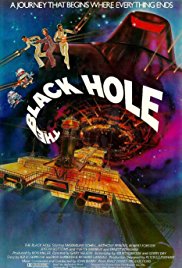
The Black Hole (1979): written by Jeb Rosebrook, Bob Barbash, Richard H. Landau, and Gerry Day; directed by Gary Nelson; starring Maximilian Schell (Dr. Reinhart), Anthony Perkins (Dr. Durant), Robert Forster (Captain Holland), Joseph Bottoms (Lt. Pizer), Yvette Mimieux (Dr. McCrae), Ernest Borgnine (Harry Booth), Roddy McDowall (Voice of V.I.N.C.E.N.T.), and Slim Pickens (Voice of B.O.B.):

The Black Hole (1979) was Disney's $20 million reply to Star Wars. In the 22nd century, the Earth exploration ship stumbles across the giant Cygnus, an Earth vessel missing and presumed destroyed for 20 years. The Cygnus orbits the massive black hole that gives the movie its title.

Not as bad as I remember. You can tell how out of touch 1979 Disney was, though, by the fact that the movie mostly emulates two 1950's sci-fi epics, their own 20,000 Leagues under the Sea and Forbidden Planet, rather than, you know, Star Wars. Except for the cute robots voiced by Roddy McDowell and Slim Pickens. Their big eyes and squat shape makes them look like South Park's Eric Cartman. How's that for a distraction?

Well, and the final 10 minutes turn into a weird Christian allegory version of the trippy visuals sequence at the end of 2001. So to emulate the success of Star Wars, the people at Disney cobbled together a movie from two 1950's sci-fi epics and a Stanley Kubrick movie. This helps to explain why people in the film industry thought Disney had become increasingly out-of-touch with its audience since Walt died in the mid-1960's.

Nonetheless, the visual effects are very good. And the score by John Barry is so good that I realized I'd been humming portions of it for 39 years without remembering the source.

But the best thing is that Ernest Borgnine plays a shifty reporter. Why an expedition of four people and an annoying robot also needs Ernest Borgnine along... your guess is as good as mine.

Maximilian Schell chews the scenery as Professor Morbius... um, Captain Nemo... um, Dr. Reinhart! Anthony Perkins is suitably squirmy as an easily dazzled scientist. Robert Forster as the Captain of the Palamino and Yvette Mimieux and Joseph Bottoms as the other crew members... well, they showed up and they got paid. There's not a lot for them to do. Lightly recommended.

Friday, June 15, 2018

Solo (2018)

Solo (2018): written by Jonathan and Lawrence Kasdan; directed by Ron Howard; starring Alden Ehrenreich (Han Solo), Woody Harrelson (Old Muley), Donald Glover (Lando Calrissian), British Comic Who Sounds Like Tilda Swinton (Sexy Droid), Emilia Clarke (Space Mafia Princess), Paul Bettany (Annoying English Guy), and Thandie Newton (I'm Not Doing six months of reshoots!):

Solo... A Star Wars Story... hmm. Spoilers ahoy!

1) The movie tells but doesn't show Solo as a young street punk on Corellia, making one wonder if an opening montage establishing this was left on the cutting-room floor some time during the process of scrubbing all of Phil Lord and Chris Miller's influence from the movie and reshooting 70% of the movie.

2) Boy, the first 20 minutes on Corellia are clunky and boring.

3) Hyperfuel/Coaxium. After fuel wasn't mentioned in 40 years of Star Wars movies, suddenly it's a major plot point in The Last Jedi. Now, fuel gets mentioned in the opening "scroll" (OK, it wasn't a scroll) and becomes the driving force of the plot. It sort of feels like the creators were backfilling the role of fuel in the Star Wars universe so that some day, when someone watches these things in chronological narrative order, Solo will have set up The Last Jedi. That's retroactive continuity!

4) Ditto for Han Solo's golden dice. As an original viewer of Star Wars, I don't even remember the dice. I mean, I assume they're hanging from the Millennium Falcon's rear-view mirror, but nope... no memory. Now they get more close-ups than Chewbacca. Feels like more narrative backfilling for Last Jedi. Maybe the dice will now get their own spin-off movie.

5) Thandie Newton dies blowing up a railway track that doesn't need to be blown up unless the objective is to piss off the Empire as much as possible. Maybe Newton didn't want to do reshoots and requested that her character be killed off as quickly as possible because she wasn't doing any more Star Wars acting.

6) Coaxium. Sometimes you need a train car, sometimes you need a garbage bin, sometimes you need a suitcase. Was there just one garbage bin worth of coaxium on the train and the rest was, um, packing material? Snow? If they only needed a suitcase of refined coaxium, why did they need to steal an entire train car worth? Why is refined coaxium less volatile than raw coaxium? More importantly, if Crimson Dawn works for/with the Empire, why do they need to steal coaxium? Wouldn't the Empire just, you know, SELL IT TO THEM??????? Thinking of this last was when my brain broke. The entire plot of Solo is... pointless.

7) I guess the revelation is that Dark Helmet turns out to be a girl. And good rather than evil, but primarily a girl. As a revelation, it falls flat because I was sitting there going, "Am I supposed to recognize her? Was she on Star Wars Rebels too? And do these Rebels travel the galaxy on speeder bikes? Because if so, that's definitely some hardcore star travel!

8) Wow, the set-up for the Kessel Run was laborious, wasn't it? On the bright side. Han accidentally kills Cthulhu. Nice work, boys!

9) Jesus, Chewbacca's Wookie pal on the Klingon Penal Asteroid of Rura Penthe looks a lot like Chaka from Land of the Lost. Distractingly so!

10) Is there a Coaxium refinery on Kessel? I don't think so, given that robbing it would make more sense than stealing unrefined coaxium. But if not, getting coaxium to a refinery must be the most dangerous job in the universe given how quickly it turns explodey.

11) Wait, all the Coaxium in the area is located... under the spice mines? Hunh? Kessel: home to spice and Hyperfuel! You'd think they'd fix the place up a bit!

12) This card game doesn't seem that difficult.

Oddly enough, I enjoyed it. Sort of. Lightly recommended.

Monday, December 18, 2017

Star Wars Episode VIII: The Last Jedi (2017)

Mark Hamill wishing he were somewhere else.
Star Wars Episode VIII: The Last Jedi (2017): written and directed by Rian Johnson; starring Mark Hamill (Luke Skywalker), Daisy Ridley (Rey), Carrie Fisher (Leia), Adam Driver (Kylo Ren/ Ben Solo), John Boyega (Finn), Oscar Isaac (Poe Dameron), Andy Serkis (Snoke), and Laura Dern (Vice-Admiral Holdo): 

So many moving parts. Mark Hamill, Daisy Ridley, and Adam Driver are genuinely terrific. Really, everyone is -- it's the most naturalistic acting in a Star Wars movie since The Empire Strikes Back. And Rian Johnson also manages some lovely shots while also slowing down a light-saber battle so that one can actually follow it. Laura Dern supplies a certain amount of delight as a Rebel -- sorry, 'Resistance' -- Vice Admiral. 

Are there problems? Definitely. It's too long by one goofy sub-plot and one too many climactic battles. There are moments the movie seems to be trying to sell as many new toys as possible, including not one but two new flavours of Star Destroyer, a Death-Star-derived bunker buster cannon, and the Porgs, which look like the bastard offspring of puffins and Keane kids.

A long time ago in a galaxy far, far away, Dune's Frank Herbert filed suit against Star Wars and lost. 40 years later, a Dune parallel surfaces. Luke now resembles the disconsolate Paul Muad'dib of Dune Messiah for the first two-thirds of the movie. Oh well. Are we getting Lando Calrissian back for the third movie of this trilogy? Because that fecking Porg in the cockpit of the Millennium Falcon really isn't a replacement for Han Solo. Recommended.

Monday, December 26, 2016

Please Hammerhead, Do Hurt Them!

Rogue One: A Star Wars Story (2016): written by Chris Weitz, Tony Gilroy, John Knoll, and Gary Whitta; based on characters created by George Lucas and others; directed by Gareth Edwards; starring Felicity Jones (Jyn Erso), Diego Luna (Cassian Andor), Alan Tudyk (K-2SO), Donnie Yen (Imewe), Wen Jiang (Malbus), Ben Mendelsohn (Krennic), Forest Whittaker (Gerrara), Riz Ahmed (Bodhi Rook), and Mads Mikkelsen (Galen Erso).

Rogue One is better than any of the Star Wars prequel films. That doesn't make it a great movie, but it has its moments. Director Gareth Edwards (with seamless, inset reshoots from writer-director Tony Gilroy) manages some sublime visual moments among the frantic battles and travels.

The first 20 minutes or so are jumpy and in desperate need of streamlining. They play like a series of videogame cutscenes being fast-forwarded through by a low-attention-span gamer. Things then calm down, especially once we've bid a not-so-fond farewell to Forest Whitaker's mumble-mouthed Rebel freedom fighter. 

Felicity Jones and Diego Luna play the two leads, and it's a good thing they've got charisma because Rogue One has no interest in characterization except as it pertains to plot and motivation. Chewbacca and R2D2 playing holographic chess would be a Godsend to this film. There are no quiet moments of humour or pathos: everything serves The Plot.

The visual effects are impressive and sometimes overwhelming. The performances are solid, excepting the eccentrically unintelligible Mr. Whitaker, who also summoned mumble-mouth as a U.S. soldier in this year's Arrival. The climax goes on forever, and features about two too many sub-climaxes. The movies Rogue One pays homage to aren't always old Hollywood classics -- besides the other Star Wars movies, Rogue One nods to Serenity and Deep Impact, The Dirty Dozen and The Guns of Navarone

And, in the droid voiced by Alan Tudyk, Marvin the Paranoid Android from all the iterations of The Hitchhiker's Guide to the Galaxy.

Is it fun? Yeah, once it gets going. One never feels much for anyone -- there are too many characters and not enough lines. But it's a competent, mostly bloodless war movie. Brief stretches are spent trying to convince us that the Rebellion is more morally complex than it appeared to be in previous Star Wars films. These moments never really 'stick.' The Star Wars Universe doesn't play all that well with moral complexity. Love the Rebel Hammerhead Ship, though! Give that ship its own movie! Recommended.

Sunday, April 24, 2016

Dark Knight Detectives

A Walk Among the Tombstones (2014): adapted by Scott Frank from the novel by Lawrence Block; directed by Scott Frank; starring Liam Neeson (Matt Scudder), David Harbour (Ray), Adam David Thompson (Albert), Dan Stevens (Kenny Kristo), and Brian 'Astro' Bradley (T.J.) : Scott Frank's adaptation of one of Lawrence Block's great Matt Scudder mystery novels is a dandy modern hard-boiled detective/noir. Liam Neeson does marvelous, sorrowful work as Scudder, that dark knight of New York, as does Brian Bradley as homeless genius T.J., whose orbit intersects with Scudder's during an investigation of some horrible killings. That it wasn't the hit it deserved to be robs us of more Scudder adaptations from Frank and Neeson, which is a great, great shame. Highly recommended.


Mr. Holmes (2015): adapted by Jeffrey Hatcher from the novel by Mitch Cullin; directed by Bill Condon; starring Ian McKellen (Sherlock Holmes), Laura Linney (Mrs. Munro), Milo Parker (Roger Munro), and Hattie Morahan (Ann Kelmot) : Lovely, character-driven piece about Sherlock Holmes in twilight, bee-keeping in the country just after World War Two. McKellen does fine work as a memory-loss-plagued Holmes in his 90's and, in flashback, Holmes prior to his retirement just after World War One. 

Laura Linney and Hattie Morahan are fine as the main female supporting characters in the present and past, respectively, while Milo Parker is a refreshingly non-annoying child actor. Parker plays the son of Holmes' housekeeper Linney in the 1940's sequences, fascinated by the life and career of the World's First Consulting Detective. 

The narrative plays around with what we 'know' of Holmes' life from Sir Arthur Conan Doyle's stories by playing with Doyle's own literary conceit that Holmes was a real person whose adventures were recounted -- and sometimes embellished -- by Holmes' friend Dr. Watson. The mysteries in Mr. Holmes aren't great ones. It's the film's engagement with memory, loss, and regrets that makes it so moving. Highly recommended.


Star Wars: The Force Awakens (2015): written by Lawrence Kasdan, J.J. Abrams, and Michael Arndt; directed by J.J. Abrams; starring Harrison Ford (Han Solo), Mark Hamill (Luke Skywalker), Carrie Fisher (Princess Leia), Adam Driver (Kylo Ren), Daisy Ridley (Rey), John Boyega (Finn), Oscar Isaac (Poe Dameron), and Andy Serkis (Supreme Leader Snoke) : Still a zippy ride on the small screen, where the greatest strength of the film -- its terrific casting and direction of the new characters -- stands out more than ever. And BB-8. Can't forget BB-8. Highly recommended.


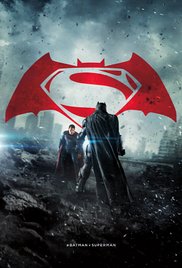
Batman v Superman: Dawn of Justice (2016): written by David S. Goyer and Chris Terrio; directed by Zack Snyder; starring Ben Affleck (Batman), Henry Cavill (Superman), Gal Gadot (Wonder Woman), Amy Adams (Lois Lane), and Jesse Eisenberg (Lex Luthor): A second viewing made me think that the movie might have been better had the entire section of Batman actually fighting Superman been excised in favour of a brief conversation between the two. I like the idea of a movie entitled Batman v. Superman that doesn't actually include a battle between Batman and Superman. 

With a nod to Chekov's gun, the Excalibur reference on the wall in the first Act goes off in the third. Hoo ha. At least it attempts to be a movie and not just another slab of Marvel Movie Product (TM). And Gal Gadot's Wonder Woman really is Da Bomb once she gets into battle. Still, it feels like Aquaman really should have showed up with that spear at the end. Recommended.

Thursday, December 24, 2015

Holiday Grab-Bag!


Mars Attacks!: adapted by Jonathan Gems, Scott Alexander, Larry Karaszewski, Martin Amis, and Tim Burton,  from the trading card series written and illustrated by Len Brown, Woody Gelman, Wally Wood, Bob Powell, and Norm Saunders; directed by Tim Burton; starring Jack Nicholson (The President/ Art Land), Glenn Close (First Lady), Annette Bening (Barbara Land), Pierce Brosnan (The Professor), Martin Short (The Press Secretary), Sarah Jessica Parker (Natalie), Michael J. Fox (Jason), Jim Brown (Byron), Natalie Portman (The President's Daughter), Lukas Haas (Richie Norris), Rod Steiger (General Decker), Pam Grier (Louise Williams), Jack Black (Bill Glenn Norris), Lisa Marie (Martian 'Girl'), Sylvia Sidney (Gramma), Tom Jones (Himself), and Janice Rivera (Byron's Busty Co-worker) (1996):

You may think Mars Attacks! is vicious until you see the insane 1950's trading cards it's based on. Holy crap! I wish the insanity got going a lot sooner in the film, or that ten minutes were trimmed from the first half. But it's still a triumph of a sort, a snarky 'FU!' to Hollywood blockbusters and good taste. Nods and homages abound, to the spinning flying saucers of Earth vs. The Flying Saucers, to This Island Earth, to Dr. Strangelove.  It's a witty, pissy movie. No wonder it bombed. Jim Brown is terrific as a heavyweight boxer turned Las Vegas greeter, and the rest of the cast is a hoot as well. Highly recommended.


Airplane!: written and directed by Jim Abrahams, David Zucker, and Jerry Zucker; starring Kareem Abdul-Jabbar (Murdock), Lloyd Birdges (McCroskey), Peter Graves (Captain Oveur), Julie Hagerty (Elaine), Robert Hays (Ted Striker), Leslie Nielsen (Dr. Rumack), and Robert Stack (Kramer) (1980): Airplane! established that Mad magazine's rapid fire, kitchen-sink approach to satire could thrive in the movies. Don't worry if a joke fails -- there's already another one on the way. The movie also retasked former dramatic actors Leslie Nielsen, Robert Stack, Peter Graves, and Lloyd Bridges as mostly deadpan comedians. For Nielsen especially, it was the start of a career resurgence. The movie also helped change NBA legend Kareem Abdul-Jabbar's public image from that of a humourless, standoffish sourpuss. Highly recommended.


Star Wars: The Force Awakens: written by Lawrence Kasdan, J.J. Abrams, and Michael Arndt; directed by J.J. Abrams; starring Harrison Ford (Han Solo), Mark Hamill (Luke Skywalker), Carrie Fisher (Princess Leia), Adam DRiver (Kylo Ren), Daisy Ridley (Rey), John Boyega (Finn), Oscar Isaac (Poe Dameron), and Andy Serkis (Supreme Leader Snoke) (2015): Yes, it borrows a lot of plot points from previous Star Wars films. And there are a couple of sequences in which necessary explanatory dialogue seems to have been left on the editing-room floor. But it's still a great deal of fun. And the casting of the young leads, especially Daisy Ridley and John Boyega, is terrific. 

I'd rate it far ahead of the three prequels and somewhat ahead of Return of the Jedi. And I'm optimistic that subsequent installments may be better. For some reason, I imagine J.J. Abrams breathing an Admiral Ackbar-style sigh of relief once the box office and the reviews started coming in. He's not an original film-maker, but he's one hell of a pastiche artist. Highly recommended.


ESPN 30 for 30: Four Falls of Buffalo: directed by Ken Rodgers, narrated by William Fichtner (2015): Often mournful, sometimes humourous re-evaluation of the Buffalo Bills NFL teams that went to an unprecedented four straight Super Bowls in the early 1990's -- and lost all four in another unprecedented feat. The movie certainly highlights the unfortunate fact that for a lot of people, finishing second is far worse than finishing 32nd. That this bizarre, heart-breaking, triumphant series of seasons happened to much-maligned Buffalo seems weirdly apt. One of the best of ESPN's usually excellent 30 for 30 documentaries, with tons of new interviews and lots of interesting archival footage. Highly recommended.


Holes for Faces (2013) by Ramsey Campbell, containing the following stories:

"Passing Through Peacehaven" (2011)   
"Peep" (2007)
"Getting It Wrong" (2011)
"The Room Beyond" (2011)
"Holes for Faces" (2013)
"The Rounds" (2010)
"The Decorations" (2005)
"The Address" (2012)
"Recently Used" (2011)
"Chucky Comes to Liverpool" (2010)
"With the Angels" (2010)
"Behind the Doors" (2013)
"Holding the Light" (2011)
"The Long Way" (2008)


Excellent collection of horror stories from the 21st century, with the venerable Ramsey Campbell -- first published in the 1960's by Arkham House --  demonstrating that he's still a master of both terror and poignance. Many of these stories deal with the effects of childhood trauma as remembered and re-experienced by an adult. Sometimes the antagonist is a supernatural menace, though in many of the stories, the problem could actually be a delusion. Throughout the stories, Campbell's often near-hallucinatory descriptions of people, things, and events keep the level of unease high. 


The stories also deal with children facing supernatural and non-supernatural terrors, perhaps none more acutely than the increasingly confused 13-year-old protagonist of "Chucky Comes to Liverpool." Here, his mother's involvement in a community campaign against horror movies -- and her obsessive 'protection' of him from all evil media influences -- causes major psychological problems. It's a fine story that works even better if one has read Campbell's essays on some of the censorship 'debates' he attended during various English campaigns against horror movies, some of them hysterically focused on the Chucky franchise.


The effects of old age are the focus of several stories, sometimes aggravated by those recurring childhood traumas, sometimes twinned with a separate character facing new childhood trauma. There are parents inflicting psychological traumas on their children. And there are trains and train stations. Seriously. 


Sometimes the train is the problem, sometimes the station, sometimes both... and sometimes not being able to find a train station leads one into dire supernatural peril. Given the focus on (as the back cover says) "Youth and age," the emphasis on trains and train stations, on arrivals and departures, seems only natural. There may be non-human and formerly human monsters throughout the collection, but they're mostly seen only in vague half-glimpses of terrible import. Their occasional complete manifestations, when they come, can be shocking, but it's the reactions of the various characters to the supernatural, or the seeming supernatural, that makes the stories so strong. We may not all meet ghosts, but we all know guilt and fear and regret. Or a hatred of Physical Education classes. Highly recommended.

Thursday, October 1, 2015

That's Entertainment 2.0

Ready Player One by Ernest Cline (2011): This YA, nominally science-fictional novel by Ernest Cline screamed 'Adapt me, Hollywood!' as soon as it came out. And indeed Hollywood came, and Spielberg directs for a 2017 release. It's a shame, I think, that Spielberg choice -- Edgar Wright could probably make a movie better than the book by putting a noticeable spin of satire on things. He could certainly match or exceed its manic, mindless metafictionality.

We start in Oklahoma City in the 2040's, in an America gone to ground in the ruins of its apathy and decayed infrastructure. Pretty much everyone, rich and poor, spends a lot of time inside the OASIS, a Massively Multiplayer Online Everything created by a reclusive and now deceased billionaire genius. Upon his death, that genius created a contest. Whoever wins the contest wins his company and his fortune, the latter somewhere in the mid-100 billions. Years go by, the contest unsolved. And then, one day, our orphaned, poor, plucky protagonist figures out the first stage of the contest. And we're off.

Because the billionaire obsessed over the pop culture of his childhood, everyone who's anyone is now an expert on pop culture from the 1960's to the 1980's, from video games to types of sugary breakfast cereal, from Japan and the United States and Great Britain, from Family Ties to Ultraman. They have to be experts. A detailed knowledge of the band Rush may be vital to winning the contest.*

Ready Player One has its charms. It's relentlessly entertaining and tightly plotted within its extraordinarily familiar plot outlines. The pop-culture references are sometimes fun. Some of the near-future, dystopian world-building is inspired. The world has burned itself out, and no one even bothers trying any more. When one can escape into a candy-coloured Matrix of near-infinite entertainment, the world outside can go to hell. A gifted science-fiction writer could do a lot with a world in which the Real has disintegrated while the Unreal has flourished. Cline isn't that gifted a writer. And besides, he wants you to have FUN.

Oh, FUN. This is indeed a novel of endless entertainment. Its own plot beats and characterization are almost doubly Meta: everyone in the novel knows about Star Wars and Dungeon and Dragons and Harry Potter and The Matrix. That our orphaned protagonist is a cross between Luke Skywalker and Neo and Harry Potter can't really be complained about in a novel that acknowledges all those influences throughout. Or can it?

Well, entertainment! Our protagonist Wade (or his online avatar Parsival, if you prefer) exists in a flattened-out world of popular though often geek-centric entertainment. You're not going to get any high-culture references here. Well, you get one Shakespeare quote, but that's because the play and the game share the same name of [The] Tempest. There are a lot of giant robots, and giant robots are cool. There's a lengthy section devoted to Rush's 2112 with nary a mention of Ayn Rand. There's a lengthy section devoted to Blade Runner which pays lip service to the idea that the genius recluse's favourite novelist was Philip K. Dick, but there's no trace of Dick's novels or short stories, much less his sensibilities, in the novel.

This is a Fun Machine. Welcome to it. There's a brief moment towards the end when what had begun to seem to me to be the best possible climax for the novel seems to manifest itself. But then it doesn't. This is exactly the sort of genre work driven by David Langford's Plot Coupons and the search for them that we've seen a million times before. And there's nothing inherently wrong with that. But there's nothing here of meaning. There's nothing aesthetically challenging. There's nothing Sublime. Ready Player One is all Cracker and no Jack.

The real-world sections are William-Gibson-lite; the OASIS sections are so saturated with pop culture that by the end, you may feel a need to read or watch something difficult, whether that's a Bergman movie or a stretch of writing by James Joyce, just to reconnect with the idea that there's more to art than entertainment. The novel even makes Monty Python unsubversive. Ready Player One could be one of the disturbingly simplistic, perfectly immersive melodramas that humanity drowns the best part of itself within, in Ray Bradbury's Fahrenheit 451. It's exhaustive. It's exhausting. But by God, you will bloody well be entertained. Recommended.


*Spoiler Alert: It is.

Thursday, November 3, 2011

War Stars

The Anvil of Stars by Greg Bear (1993): In this sequel to Bear's excellent late-1980's science-fiction disaster novel The Forge of God, Earth has been murdered by self-replicating machines created by a race known to the rest of galactic civilization only as the Killers, who have seeded the Milky Way with machines that seek out and destroy intelligent life wherever they find it.

The Benefactors, benevolent machines created by an alliance of interstellar civilizations, arrived in our solar system too late to fully defeat the machines of the Killers, though they did rescue tens of thousands of people from the dying Earth (along with a laundry list of species) and begin the process of renovating Mars and Venus into two new homes for humanity's survivors.

Part of humanity's bargain with the Benefactors involves the selection of a crew for a 'Ship of the Law' sent forth to find and destroy the home of the Killers if they still exist. Every race saved by the Benefactors sends such a ship forth, partially built from the materials of that species' dead homeworld if the homeworld has been destroyed.

The sentient, benevolent machines of the Benefactors are cagey -- in order to protect themselves, the races of the alliance don't tell the races they've rescued who they are or where they live, at least not immediately. Any intelligent, space-faring race may become a Wolf species like the Killers. In space, the best defense is silence and misdirection. The Killers targetted Earth because of the radio and television signals that have been flooding into space for the last 100 years. Highly developed species maintain a low electromagnetic footprint as a matter of self defense.

Five years into their mission, the 80+ human teenagers of the Ship of the Law Dawn Treader come across a solar system that seems to be the home of the Killers. Hundreds of years have passed outside the ship as it moved at speeds close to light in its search (welcome to relativity -- the universe of the novel doesn't seem to allow for faster-than-light travel). Technologies that can wipe solar systems off the map are about to compete -- and one will be found wanting.

Martin, the main narrator, is the son of one of The Forge of God's protagonists, and we see much of the search and the battles with the Killers through his eyes. This is hard, extrapolational science fiction, Bear's specialty. Those laws of physics which aren't yet known are extrapolated logically from some fairly arcane ideas of Bear's about how things really work at the quantum level. The result is a mix of the probable (relativistic effects being the most 'normative' thing here from a scientific point-of-view) and the meticulously extrapolated (everything from quark matter to the instantaneous communications devices the crew calls 'noaches' for 'no channel').

And along with an examination of group dynamics comes one fascinating alien race -- the Brothers, from another Ship of the Law that joins the Dawn Treader in its final assault, who are cooperative life-forms made up of smaller, potentially independent creatures that look like giant centipedes. Some time and attention is lavished on the culture of the peaceful Brothers, whose biological need for cooperation makes them less war-like and more thoughtful than the humans. They're terrifically imagined aliens -- their group-form nature has even affected their mathematics, which deals only in probabilities and not in integers.

In the end, though, it's the space battles that form the twin nuclei of the novel's narrative. Going back to E.E. "Doc" Smith's space operas of the 1920's and 1930's, print science fiction has given us star wars that make Star Wars look like a fart in an elevator, and Anvil of Stars is no exception. But Bear takes care to evaluate the ethics of war -- and indeed of genocide -- through the contrasting viewpoints of his human and alien characters.

The narrative also works as a group bildungsroman for the various human characters, as all must wrestle with why and how to achieve justice against a race that may no longer remember why it did what it did -- or, alternately, to survive the psychic trauma knowingly exacted by the still-thriving, still-malevolent Killers as they play hide-and-seek behind artificial worlds, alien races and entire civilizations. Thoughtful, insightful and thrilling. Highly recommended.

Sunday, September 11, 2011

10 Original Star Wars Trilogy Blu-Ray Fixes the Fans Might Actually Enjoy

And give her a part. Or at least her boobs.


1. Show us a womp rat already.

2. Change the Forest Moon of Endor to the Wookie home planet and the Ewoks to Wookies, the way they were originally supposed to be. Defeat of Imperial troops by furry forest dwellers now at least remotely plausible.

3. Give the X-Wing fighters rear-firing guns so that they can do something other than play target practice with the pursuing TIE fighters in the trench.

4. Have the Death Star blow up Naboo instead of Alderaan.

5. Have Han shoot first.

6. Fix the ridiculously awful-even-for-1983 explosion of the Super Star Destroyer when it dives into the Death Star. This is the sort of thing that CGI can actually make look better.

7. Show the Imperial Fleet get destroyed when the second Death Star explodes, given that as-is it's hard to figure out why the battle doesn't just keep going.

8. Have either Yoda or Ben warn Luke not to throw away his light sabre because the Emperor can shoot lightning bolts out of his hands.

9. Fix the awful rear-projection on the Luke vs. Rancor fight. And have Luke use the Force to depress the lever rather than, like, throwing a rock.

10. When Luke takes Vader's mask off at the end of Return of the Jedi, have Vader turn out to be Stan Lee.