Showing posts with label superman. Show all posts

Saturday, October 31, 2020

Injury to Eye Motif


Justice League: War
(2014): The second animated film in the just-completed DC Animated Movie Universe (the first was The Flashpoint Paradox) reimagines the origin of the Justice League. War mostly adapts the somewhat clunky, post-Flashpoint reboot in the DC Comics universe, though it substitutes Shazam (aka the original Captain Marvel) for Aquaman. It's actually better than its Geoff Johns/Jim Lee source, though it's still burdened with some of Lee's fussy, busy superhero costume re-designs, none worse than on Superman's high-collared, no-red-trunks look.

It's also better than the live-action Justice League movie, which also adapted that Johns/Lee graphic novel/first six issues of the new Justice League. That it also explains both the origins of the heroes who  need one (Cyborg) better than the movie AND deploys Darkseid rather than his lieutenant Steppenwolf in the invasion of Earth -- well, maybe the DC Movie Universe needs to hire more people from the animation wing to work on the live-action movies.

Two somewhat perverse elements may amuse or freak out the casual viewer. For one, Alan Tudyk voices Superman, one of the most baffling voice-casting choices ever (Tudyk voices the Joker in Adult Swim's Harley Quinn series, as a point of comparison). Of course, the voice-casting here, as in the Young Justice series, deliberately establishes this as a different universe than the DC Animated shared universe of Batman: The Animated Series, Superman, Batman Beyond, and Justice League [Unlimited].

The second involves a lengthy climactic battle in which the heroes' goal is to poke out Darkseid's eyes. I shit you not!!!! In any event, recommended.


Sunday, August 26, 2018

Superman and the Justice League of America (1992)

Superman and the Justice League of America Volume 1 (1992/ Collected 2016): written by Dan Jurgens and Gerard Jones; illustrated by Dan Jurgens, Rick Burchett, Ron Randall, and others: From the months before 1992's Death of Superman event comes this collection of Justice League stories. 

In the continuity of the time, Superman didn't help found the Justice League and had never really been a member. Until now! I have a feeling adding Superman to the roster was part of the set-up for the Death of Superman. And maybe an attempt to boost sales for the decidedly underpowered, underpopular Justice League of 1992.

After a double-sized special introducing the new Justice League (and reintroducing classic JLA foes The Royal Flush Gang!), the regular stories are written by Dan Jurgens and drawn by Jurgens and finisher Rick Burchett. Jurgens and Burchett deliver solid, meat-and-potatoes superhero storytelling. 

That can often look like genius 25 years on when compared to today's often over-rendered, over-coloured, and poorly coordinated superhero comics. One can actually follow the action from panel to panel and page to page in Jurgens' work. Wow!

Jurgens and company do a good job with an underwhelming group of Justice League members and a bunch of sketchy super-villains. They manage to create a good storyline around better-left-forgotten JLA foe Starkiller. They manage to make C-list heroes that include Fire, Ice, Maxima, Booster Gold, and Blue Beetle interesting. They manage to make a satisfying mystery out of new hero Bloodwynd. 

Through it all, Superman, also written in his own title by Jurgens at the time, is his usual decent, occasionally self-doubting self. You'd think he'd been a Justice League member before! Recommended.


Superman and the Justice League of America Volume 2 (1992-93/ Collected 2016): written by Dan Jurgens and Dan Mishkin; illustrated by Dan Jurgens, Dave Cockrum, Rick Burchett, Sal Velluto, and others: The Death of Superman arrives early in this volume, which reprints only the one issue of JLA that was part of that story arc. It's not like it's hard to find a copy of the Death of Superman story from 1992, so stop complaining!

Superman's brief leadership of the JLA comes to an end off-stage, then, after which we deal with the aftermath. Superman went into battle with his killer Doomsday after the mysterious juggernaut mopped the floor with the rest of the JLA. This reality has left the JLA feeling like a failure. Well, and Blue Beetle is in a coma after getting his head somewhat crushed by Doomsday. Booster Gold's power suit is also in dire, perhaps irreparable shape. Everyone is bummed.

Before the Death of Superman comes 1992's JLA Annual, a double-length story that's part of DC's title-wide Summer Crossover Event featuring Silver Age cult character Eclipso as the villain. While the story is obviously inconclusive and not really a standalone, it's notable for art by New X-Men great Dave Cockrum, who supplies some nifty visuals, especially of Superman.

In the issues After-Death, the JLA mopes a lot until being forced into what is a really strong four-parter dubbed Destiny's Hand. It's a great 'short-long' story arc that nods to the JLA's past without sacrificing sense or clarity to continuity. It really is a gem of a story. It also manages to nod to past JLA rosters that were in 1992 'out of continuity' without requiring the reader to be aware of this if that reader doesn't know those pre-1986 JLA rosters.

Destiny's Hand is sly. And it slyly uses long-time JLA villain Dr. Destiny. By 1992, Destiny was best-known by comic-book readers as the villain in the first arc of Neil Gaiman's Sandman. There's a nod to that as well in the storyline that doesn't require the reader to know Sandman. Does Destiny's time in the realm of Sandman allow him to remember JLA rosters that never 'existed' in this continuity? Good question!


As the collection ends, so too does Dan Jurgens' year-plus stint as writer and co-artist. It was a very good year. Well, really more like 18 months or so. Recommended.


Sunday, July 22, 2018

Dark Days: The Road to Metal (2018)


Dark Days: The Road to Metal (2018): written by Scott Snyder, James Tynion IV, Grant Morrison, and Tim Seeley; illustrated by Andy Kubert, Jim Lee, John Romita Jr., Doug Mahnke, J.G. Jones, Eddy Barrows, Chris Sprouse, Greg Capullo, and others:

Technically a hybrid collection consisting of the prologue to the Batman/JLA story Dark Days: Metal, that prologue being Dark Days: The Forge and Dark Days: The Casting, along with select stories that supply some background to Dark Days: Metal. In theory, this volume could have been about a gajillion pages long.

Why?

Because Dark Days: Metal attempts to create a Grand Unified Theory for the origin of a wide variety of the strange metals and substances that have been appearing in DC Comics since 1940, from the original Hawkman's anti-gravity Nth Metal to the resurrecting Lazarus Pit of Batman foe Ra's Al Ghul. And dozens more. And the theory brings in the origin of certain types of superpowers, the reason why the Joker never dies, and... well, a lot. 

Dark Days: Metal writer Scott Snyder is definitely better at this sort of continuity epic than most, in part because the prologue is structured as a detective story. Batman tries to unravel the mystery of a variety of signs and portents linked to the mysterious origins of a whole lot of weird stuff in the DC Universe. 

Not to pick a nit too much, but the volume could actually use one of those Who's Who encyclopedia-like stretches in which the various thingies we see and are occasionally informed about are simply listed in terms of name, appearance, that sort of thing. I know that the 'Nth metal' of Hawkman's wings dates back to his first appearance. I'm a little shakier on '8th metal.' I know the Lazarus Pit from 50 years of Batman stories. The Electrum Ring of the Court of Owls? Unh, no.

Or was Hawkman's mace made of Nth metal? See what I mean? 

But as a prologue, this is certainly enjoyable stuff with some nice art and an interesting selection of earlier stories that also seem to have been selected to force you to buy those stories in their entirety, as most are cliffhangers from longer story arcs. 

In order to create even more cliffhangers, I'd recommend a volume consisting of pages or even panels introducing various objects and substances, ripped without context from 80 years of DC Comics. Recommended for continuity hounds. Maybe not so much for people who don't know what Nth Metal, a Lazarus Pit, or Vandal Savage are.

Saturday, June 16, 2018

The Dark Knight III: The Master Race

SUPER BEST FRIENDS AGAIN !!!

The Dark Knight III: The Master Race (2016-2017/ Collected 2017): written by Brian Azzarello and Frank Miller; illustrated by Andy Kubert, Klaus Janson, Frank Miller, Eduardo Risso, John Romita Jr., Brad Anderson, and Alex Sinclair: Rumours are that Frank Miller had very little to do with the writing of this follow-up to The Dark Knight Returns (1986-87) and The Dark Knight Strikes Again (2001-2002). His art duties involve the inking of a few covers and drawing inter-chapter 'mini-comics' that contextualize portions of the main story. 

The main story is credited as 'Story by Frank Miller and Brian Azzarello.' Penciller Andy Kubert and inker Klaus Janson (inker of The Dark Knight Returns) do a fair job of maintaining their own styles while also paying homage to Miller's art style circa 1986. Miller's art in the mini-comics is sort of awful at points, reaching a nadir when he hinges the Atom's legs backwards, having apparently forgotten how knees work.

Taking up three years after The Dark Knight Strikes Again and six years after The Dark Knight Returns, DKIII again features aging versions of DC's major superheroes in a near-dystopic future. Events conspire to team up Batman, Superman, Wonder Woman, and many others to oppose a new global threat. One of the signs that Miller may not be writing much of the book is that Superman comes across pretty well for once, even saving Batman's life at one point. It's a shocker. 

Azzarello, if he scripted most of this, supplies lots of tough-guy and tough-girl introspection alongside all the fist fights and explodey-ness. Kubert and Janson give us suitably over-sized heroes and villains, innocents and grotesques and all that jazz. The whole thing goes down smoothly and way, way faster than the original The Dark Knight Returns and its intermittently densely packed pages of dialogue and exposition set off by full-page spreads. There's still satire here, particularly of both Obama and Trump, but it's pretty boilerplate stuff. 

Azzarello, not really known for writing superhero punch-ups, has written a giant superhero punch-up. It's enjoyable, certainly far more enjoyable than the clumsy and misanthropic Dark Knight Strikes Again, though no touch on the original. Miller's far-right politics seems to manifest in the idea of Kryptonian cultists who look and act a lot like stereotypical Muslim fundamentalists, but the comparison is never pushed too far (and these fundamentalists appear to believe in gender equality). In all, lightly recommended.

Tuesday, May 29, 2018

Action Comics: 80 Years of Superman (2018)

Action Comics: 80 Years of Superman: The Deluxe edition (2018): edited by Paul Levitz: Not Action Comics 1000 but a companion volume. With Action Comics the first mainstream American comic book to reach 1000 issues, DC released both a special anniversary issue and this thick volume of reprints, the latter containing one never-before-published story from the Shuster studio, and a new story by editor Paul Levitz and legendary artist Neal Adams.

Created by Cleveland teenagers Jerry Siegel and Canadian ex-pat Joe Shuster (cousin of Frank Shuster of Wayne and Shuster), Superman came to life in 1932 and was then met by complete indifference from the comic strip syndicates for the next 6 years. 

Finally, what would become DC Comics bought Superman from Siegel and Shuster for less than a thousand dollars in 1938. In Action Comics 1, cover-dated June 1938, Superman ignited the superhero genre. Everything with American superheroes springs from that moment, this creation of Siegel and Shuster.

Neal Adams (him again!) led the battle in the 1970's to get more compensation for Siegel and Shuster beyond that initially paltry sum. Time Warner, DC's corporate overlord, caved to a certain extent, granting the Cleveland duo a pension. More lawsuits and settlements would follow over the years.

Here we are, 80 years later. Action Comics has reached 1000 issues, though recently it wasn't always numbered that way as DC restarted the numbering in 2012 for reasons I won't bother explaining before returning to the original numbering (folding the new numbering in as well). Detective Comics should have gotten here first, but Action Comics was a weekly for a year back in the 1980's. Thanks, Action Comics Weekly!

Paul Levitz has assembled 300+ pages of stories, essays, and covers. It's solid work -- and I don't think this type of anniversary volume is easy to assemble, as Levitz had to serve history as well as artistic achievement. Thus, this isn't The Best of Superman.

For one thing, Levitz was charged with presenting the other recurring DC heroes who first appeared in the pages of Action Comics (Vigilante, Zatara the Magician, Supergirl, Human Target). For another, the book emphasizes Firsts and Anniversaries along with major stories. That still leaves lots of material.

So pretty much all the great writers and artists are here, though some are by necessity omitted. The raw power of the first two Superman adventures by Siegel and Shuster still compels, to the extent that one wishes Superman would return to his left-wing, agit-prop roots, when stopping a domestic abuser and saving a wrongly convicted woman from the electric chair were more common moments for the Man of Steel than punching it out with some angry-ass super-villain or another.

Oddly, the book doesn't present any of the two-page Superman stories from Action Comics Weekly, I assume because they presented a serialized story in emulation of the Sunday full-page comic strips.

In any case, there's a lot here to delight both a Superman aficionado and a casual reader. The reproduction of the art is generally good, not always easy when the originals don't exist (the muddiest looking reprint comes from 1978, which is a shame because the story is a humdinger of a 40th anniversary issue). A Joe Kelly-penned, many-artist-illustrated anniversary story from the oughts is excellent. A never-before-printed story from the Shuster Studio is a rare find, as is Marv Wolfman's tale of how he rescued it from the garbage. Paul Levitz pens an original story to end the volume, illustrated by comic-book-art Titan Neal Adams.

The essays are fine, too -- none match Ray Bradbury's text piece from Superman 400, but that's a pretty high standard to meet. So all in all, a satisfying volume that I'd be happy to read at twice the length. Long may the Reign of the Superman continue! Highly recommended.

Wednesday, April 4, 2018

Justice League (2017)

Justice League (2017): written by Joss Whedon, Chris Terrio, and Zack Snyder; directed by Zack Snyder and Joss Whedon; based story-wise on works by James Robinson, Gardner Fox, Nicola Scott, Mike Sekowsky, Geoff Johns, and Jim Lee; starring Ben Affleck (Batman), Gal Gadot (Wonder Woman), Amy Adams (Lois Lane), Ezra Miller (The Flash), Jason Momoa (Aquaman), Ray Fisher (Cyborg), Jeremy Irons (Alfred), Ciaran Hinds (Voice of Steppenwolf), Amber Heard (Mera), Diane Lane (Martha Kent), and Henry Cavill (Superman):

A partial list of mainstream superhero movies to which the hilariously maligned Justice League is clearly superior:


  • Batman Forever
  • Batman & Robin
  • The Dark Knight Rises
  • Hulk 
  • The Incredible Hulk 
  • Iron Man 2
  • Avengers: Age of Ultron 
  • Thor
  • Thor: The Dark World 
  • Dr. Strange 
  • Man of Steel
  • Suicide Squad
  • Batman v. Superman: Dawn of Justice
  • Superman III
  • Superman IV 
  • Superman Returns 
  • X-Men: The Last Stand 
  • X-Men: Apocalypse
  • Wolverine: Origins 
  • The Wolverine 
  • Spider-man 3
  • The Amazing Spider-man 2 
  • Fantastic Four
  • Fantastic Four: Rise of the Silver Surfer
  • Fantastic Four reboot...


I liked Justice League more on re-watching on TV, where the humour stands out more than the CGI bombast. I'm guessing 95% of that humour comes from Joss Whedon's frantic work to make Zack Snyder's scenes lighter, funnier, and less Ayn-Randish. Would I have gone with Jack Kirby's least interesting New Gods villain as the big bad, especially given that he shares a name with both a cult novel and a 1970's rock band? Probably not. Recommended.

Tuesday, March 20, 2018

Doc Savage: Skull Island (2013) by Will Murray

Doc Savage: Skull Island (2013) by Will Murray: Will Murray has written more official Doc Savage novels than anyone but Savage co-creator/developer Lester Dent. He's done so since the early 1990's, first adapting and expanding unused Dent plots and radio scripts. Skull Island, though, is different -- an authorized team-up of Doc Savage and King Kong!

Who is Doc Savage? The hero of 181 pulp-magazine novels published between 1933 and 1949, reprinted to surprising popularity starting in the early 1960's and continued by Murray and others once those novels ran out in the late 1980's. Trained since childhood to be a physical and mental marvel, Doc fought super-villains and monsters in that pulp series, becoming the second-most popular pulp hero in sales, after The Shadow.

The Man of Bronze supplied the Superman Mythos (through Doc-savvy Superman editor Mort Weisinger and through Superman creators Jerry Siegel and Joe Shuster) with a number of attributes:


  • Doc's Fortress of Solitude predates Superman's.
  • Doc's first name, like Superman's, is Clark -- Clark Savage, Jr.
  • Doc, like Superman, has a crime-fighting female cousin.
  • If the Man of Bronze, Doc's most famous nickname, led directly to the Man of Steel, well, another Doc nickname -- the Man of Tomorrow -- was appropriated verbatim for Superman.
  • One of Siegel and Shuster's early Superman pages describes Superman as "A Genius in Intellect! A Hercules in Strength!", which sounds a lot more like Doc Savage than Superman.


Anyway, Skull Island is both terrific and atypical. The frame narrative concerns Doc returning to New York from his Fortress of Solitude c. 1932, too late to save Kong from his tragic fate. Two of Doc's lieutenants, apish chemist Andrew 'Monk' Mayfair and waspish lawyer 'Ham' Brooks, witnessed some of the final battle shown in the 1933 movie from Doc's heavily armored New York offices on the 86th floor of the Empire State Building. So, front-row seats.

Doc accepts the task of moving Kong's body from its impact site at the base of the Empire State Building and preparing it for transportation back to Kong's home of Skull (Mountain) Island. Once Doc has sent an embalmed Kong on his way in the world's largest burial shroud, to be shepherded back to Skull Island by promoter Carl Denham in the hold of the freighter that fatefully brought Kong to New York, he tells Monk and Ham the story of his first encounter with Kong.

A young Doc Savage sets off on a sea voyage with his generally absent father in 1920, after Doc's return from WWI. Clark Savage, Sr. wants to find his missing father, Doc's grand-father, 'Stormalong' Savage, lost for years somewhere in the Indian Ocean.

Battles with head-hunters and pirates come along before the Savages discover Skull Island, hidden within its permanent fog bank. On the island is Stormalong Savage, along with the monsters we saw in the original King Kong and some dinosaurs and perils we didn't see in King Kong. And there is Kong, of course.

Given the chance to tell a story about Doc Savage before he was Doc Savage (if you know what I mean), Murray delves much more into the psychology of the young hero. Clark Savage, Sr. has just been murdered as the first Doc Savage novel, The Man of Bronze, begins. Here, I think Murray does a swell job of fleshing out the relationship (and lack thereof) between the two Savages. Stormalong is also a terrifically fun and poignant figure. So, too, Kong, a threat who becomes an ally to the Savages, possibly because they don't have designs on taking him back to civilization.

Murray gives us some lovely moments, often spiked with graphic violence -- Doc has not yet adopted his 'no killing' policy. Indeed, he wouldn't adopt this until several novels into his career -- the early Doc Savage novels present a fairly murderous Doc.

Skull Island also acts as a welcome antidote to Peter Jackson's ridiculous retconning of King Kong into a really big gorilla. King Kong, faithful to the original novel, is almost completely bipedal and resembles no ape on Earth -- he truly is a rara avis, a different species. This makes sense. In Peter Jackson's world, a tiger would exactly like an over-sized domestic cat and an ostrich a big chicken. Screw you, Peter Jackson.

Anyway, this is a swell Doc Savage novel, somewhat revisionist insofar as we delve into the origins of Doc's psychology (and into the origins of the Doc Savage Oath!). It's fun without being entirely weightless, as good pulp entertainment should be. Highly recommended!

Saturday, November 18, 2017

Justice League (2017)

Justice League (2017): written by Joss Whedon, Chris Terrio, and Zack Snyder; directed by Zack Snyder and Joss Whedon; based story-wise on works by James Robinson, Gardner Fox, Nicola Scott, Mike Sekowsky, Geoff Johns, and Jim Lee; starring Ben Affleck (Batman), Gal Gadot (Wonder Woman), Amy Adams (Lois Lane), Ezra Miller (The Flash), Jason Momoa (Aquaman), Ray Fisher (Cyborg), Jeremy Irons (Alfred), Ciaran Hinds (Voice of Steppenwolf), Amber Heard (Mera), Diane Lane (Martha Kent), and Henry Cavill (Superman):

Saw Justice League at the 12:45 p.m. show in Galleria on opening day. The 'print' arrived late so they hadn't done a sound-check before showing it. Oops! 

The first ten minutes played without any noticeable treble in the mix (seriously!), which made for an interesting audio experience. I wondered if Christopher Nolan had done the sound mix until they stopped the movie, fixed the sound, and started again from the beginning.

Then for another ten minutes or so, the theatre made almost inaudible announcements that it was seeking out the source of the fire alarm (which we couldn't hear) and not to panic. Friday was a PA Day for kids. Damn kids going to a superhero movie in the afternoon and pulling fire alarms! Rascals!

Also they never quite got the movie framed properly. But then we all got free passes at the end of the show, so really, who's complaining? Though it did all make me wonder if Disney is paying people to sabotage the film.

As to the film -- well, the stitches between the fairly light-hearted, earnest or snarky Whedon scenes and the glum, occasionally straining-to-be-funny Snyder scenes are pretty obvious. Whedon also turned up the Brightness, which means Superman is actually dressed in bright blue and red for the first time in the DCEU movies, so that's good. 

Whedon clearly also had the job of hacking and slashing the movie down to two hours, and having it be basically 'stand-alone' rather than Part One. So Darkseid gets only one mention, though it's clear that the big bad works for him (the villain is Steppenwolf, who is a Kirby New Gods character whom writer James Robinson promoted to Darkseid's world-conquering general in the Earth-2 comic series from 2012). 

The hacking and slashing results in some pretty funny 'infodumps' which end up feeling like homages to the crazily fast-paced, Gardner-Fox-scripted Silver Age Justice League comics from the 1960's. The explanation of what a Mother Box is is especially... compact... as is an exchange between Aquaman and Atlantean Mera (Amber Heard) which condenses Aquaman's back story into about 45 seconds of dialogue.

The acting is pretty solid. The Flash is genuinely funny and charming. Jason Momoa's Aquaman seems to have been written as a surly underwater hillbilly Wolderine by Snyder and as a jolly underwater stand-up comedian by Snyder. Cyborg is, well, a cipher.

Also, somebody (probably Snyder) basically restages the opening battle against Sauron from Fellowship of the Ring as part of the backstory of Steppenwolf's previous invasion of Earth, and even frames it in terms of it being the last time the various races of Earth (Atlanteans, Amazons and Greek Gods, and what seems to be King Arthur and his knights) united against a common foe. I kid you not. Wonder Woman narrates, per Galadriel in LOTR: TFOTR...

Bonus points for including parademons and getting a mention of Kirby's New Gods into the dialogue. Fun fact: the movie's 'Unity' seems to pretty clearly Jack Kirby's Anti-Life Equation restated euphemistically.

Though the only two rational explanations for Superman's unintentionally funny, late-movie line to Bruce Wayne ("How did you get the farm back from the bank ?!?!?") are that Superman doesn't understand how money works or that Lex Luthor owned the bank that foreclosed on the Kent farm.

Also, maybe it's swim-suit season on Themyscira, Snyder-haters! Did you ever think of that?

There are two end credits sequences, one early and one right at the end. Plan accordingly.

Hey, the movie is only 2 hours and one minute long. Kudos! My butt thanks you!

Far better than a lot of superhero movies, a list that includes Whedon's studio-garbled Avengers: Age of Ultron, The Dark Knight Rises, Superman III, Superman IV: The Quest for Peace, Spider-man 3, Amazing Spider-mans 1 and 2, X-Men: The Last Stand, Guardians of the Galaxy 2, the first two Thor movies, Dr. Strange, the two Hulk movies, Wolverine: Origins and The Wolverine, Batman Forever, Batman and Robin, X-Men: Apocalypse, Ant-man, Superman Returns, Man of Steel, Batman v. Superman, Suicide Squad, and many others. Recommended.

Wednesday, July 5, 2017

Secret Origins of Super DC Heroes

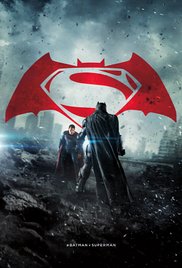
Batman v. Superman: Dawn of Justice: The Ultimate Edition (2016): written by David S. Goyer and Chris Terrio; directed by Zack Snyder; starring Ben Affleck (Batman), Henry Cavill (Superman), Gal Gadot (Wonder Woman), Amy Adams (Lois Lane), and Jesse Eisenberg (Lex Luthor): Much more satisfying than the theatrical version, the Ultimate Edition increases Batman's lunacy and develops Luthor's plot. It even adds scenes of Superman helping people and puts Jena Malone's scenes as STAR Labs' Jenet Klyburn back into the movie. Even at 3 hours, it moves better than the 2 1/2 hour theatrical version. Recommended.


Wonder Woman (2017): based on characters created by William Moulton Marston, H.G. Peter, George Perez, and others; written by Allan Heinberg, Jason Fuchs, and Zack Snyder; directed by Patty Jenkins; starring Gal Gadot (Diana), Chris Pine (Steve Trevor), Connie Nielsen (Hippolyta), Robin Wright (Antiope), Danny Huston (Ludendorff), David Thewlis (Sir Patrick), and Elena Anaya (Dr. Poison): Director Patty Jenkins and screenwriter Allan Heinberg go back to Richard Donner's first Superman movie for inspiration (among other sources). 

The result is a crowd-pleaser with a female superhero. It may go on just about one climax too many, but overall Wonder Woman is a delight, as is Gal Gadot as Wonder Woman. A relative unknown, she shows the star power and charm of that other relative unknown, Christopher Reeve. The film-makers even figured out how to make WW's boy-pal Steve Trevor interesting. Recommended.

Wednesday, January 11, 2017

Mullet Time

Superman Vs. Aliens (1996): written and pencilled by Dan Jurgens; inked by Kevin Nowlan: 20 years ago, DC and Dark Horse put out this fairly nifty battle between Superman (still in his mullet phase) and the Alien film franchise. It was a time when the Kryptonian Supergirl was still gone from DC continuity. That fact explains much of the storyline, in which Superman responds to a distress signal from a domed city in space that appears to have once been part of Krypton. It comes complete with a spunky blonde girl named Kara who's pretty much the image, in appearance and name, of the pre-1987 Supergirl.

The story is a bit heavy on the then-continuity of the Superman comics, from the mullet to the absence of Lex Luthor from the storyline. Superman can't travel unaided through space for long at this point in his career, necessitating some technology help from LexCorp. Or LuthorCorp. Whatever. 

It's solid, unspectacular, and relatively unbloody fun. There's a bit too much harping on Superman's decision not to kill anything, including hordes of acid-blooded aliens. Is this a workable moral stance for the Man of Steel under the circumstances? Well, yes, but as written it relies an awful lot on other people killing aliens, which makes the moral stance seem awfully dubious, if not completely daft. A sin of omission rather than commission is still a sin.

Inker Kevin Nowlan makes the normally straightforward pencils of writer-penciller Dan Jurgens broody, moody, and intermittently menacing. It's a great job of inking in terms of establishing a tone a penciller isn't known for -- Nowlan did something similar with his inks on the sunny Jose Luis Garcia Lopez's Dr. Strangefate during the Marvel/DC crossover around the same time. Lightly recommended.


JLA: Justice League of America: Power and Glory (2015-2016): written by Bryan Hitch with Tony Bedard; illustrated by Bryan Hitch with Tom Derenick, Scott Hanna, Daniel Henriques, Wade von Grawbadger, Alex Sinclair, and others: Maybe getting the perennially late Bryan Hitch to both write and draw a new Justice League comic book way back in 2015 wasn't such a great idea because, well, perennially late. 

It took so long for the nine issues of his initial story arc to appear that DC had already rebooted Hitch's Justice League title (now known as Justice League and not JLA: Justice League of America) when the last issue of this title came out. And by rebooted, I mean, there were as many issues of the subsequent title on the stands as there were of this title when that last issue appeared. Whew!

Hitch writes the reboot, but the art has been left to others. That's too bad because of Hitch's strengths as an artist, strengths that outweigh his strengths as a relatively new writer. Hitch's art, a career-long riff on Neal Adams and Alan Davis, made him a superstar nearly 20 years ago in the pages of ultra-violent superhero book The Authority. And he does good work here -- 'widescreen,' as they say, cosmic though sometimes crowded.

His writing seems a bit padded at times. Nine issues seems like about two issues too much here, with about 40 pages too many of running back and forth without resolving anything plot-wise. Hitch's new Justice League has shorter story arcs so far, suggesting that something may have been learned.

Power and Glory pits Superman, Wonder Woman, Batman, and the usual gang of super-powered idiots against the Kryptonian Sun-god Rao, who arrives in near-Earth space with a whole lot of super-powered followers and an offer to bring peace, health, and long life to all the citizens of Earth -- and indeed, someday, everyone in the universe. He's initially greeted as a saviour. And of course there's a catch.

Hitch throws a lot of super-science and bombastic, epic battles around the nine issues. And time travel, strange visitors with hidden agendas, and weird standing stones waiting to fulfill some plot point or another. It's good, overlong fun. One caveat: in order to finally put a capper on this story (and this JLA title), DC elected to have other people write and draw the final issue, with only the plot by Hitch. Given how long readers had waited by this time, a few more months could probably have been survived if the end result was an all-Hitch writing-and-drawing issue. Oh, well. Recommended.

Wednesday, December 14, 2016

Apes and Avengers


DC Goes Ape Volume 1 (1959-99/ Collected 2008): edited by Bob Joy; written by Otto Binder, John Broome, and others; illustrated by George Papp, Wayne Boring, and others: The story goes that 1950's DC Comics editors noted a sales uptick whenever primates appeared on a comic-book cover. And so primates readers would be given, mostly gorillas and apes (and one Kryptonian super-monkey!). Well, and Detective Chimp.

This volume collects some of DC's finest, freakiest tales of super-apes and criminal gorilla criminals. The material from the 1950's and 1960's shines the brightest, giving us mainstays such as Titano the giant super-ape, the gorilla crime boss of Gotham, telepathic Flash villain Gorilla Grodd, a super-monkey to annoy a young Superboy (or was it Superbaby?), and several others. Wonder Woman even gets changed into a gorilla by an astronaut gorilla from another world. Hoo ha! Recommended.


Avengers: Assault on Olympus (1987/ Collected 2011): written by Roger Stern and Bob Harras; illustrated by John Buscema, Bob Hall, Tom Palmer, and Kyle Baker: Roger Stern's tenure as writer of the Avengers in the 1980's stands as one of two or three high points for Marvel's superhero group. And the art by John Buscema and finisher Tom Palmer was more than solid as well. 

In the aftermath of the epic siege on Avengers mansion story arc, the Avengers find themselves plunged into the world of the magical and mythic. Avenger Hercules got beaten into an unbreakable coma during the siege. Now, Zeus blames the Avengers for Hercules' condition -- and seeks vengeance. It's fun stuff, with one of the more powerful Avengers line-ups when it comes to brute strength (She-Hulk, Thor, and the Sub-mariner). An off-beat standalone story about Avengers' butler Jarvis rounds out the collection. Recommended.

Monday, August 15, 2016

Task Force X!

Suicide Squad (2016): written and directed by David Ayer; based on DC Comics characters and situations created by John Ostrander, Luke McDonnell, Gerry Conway, Paul Dini, Bob Haney, Howard Purcell, and many others; starring Will Smith (Deadshot), Margot Robbie (Harley Quinn), Viola Davis (Amanda Waller), Jared Leto (The Joker), Joel Kinnaman (Colonel Rick Flag), Cara Delevingne (June Moone/ Enchantress), Adewale Akinnuoye-Agbaje (Killer Croc), Jay Hernandez (Diablo), Jai Courtney (Captain Boomerang), Adam Beach (Slipknot), Alaine Chanoine (Businessman/ Incubus), Ben Affleck (Bruce Wayne/ Batman), and Ezra Miller (The Flash):

I'd love to see the David Ayer director's cut of Suicide Squad. Did it include as many music-video sequences? More importantly, did its first 45 minutes seem like the film adaptation of Who's Who in the DC Universe I've been waiting 32 years to see? 

Ayer is a solid, gritty director of manly men doing violent, manly things in movies that include Fury and End of Watch. And Ayer has definitely seen The Dirty Dozen, which did this sort of Rogue's Team-up with flair -- an early death in Suicide Squad bounces right off the first death in The Dirty Dozen in visual terms. Lee Marvin would really help this movie, or even someone Lee-Marvin-esque rather than Joel Kinnaman's somewhat bland portrayal of team leader Colonel Rick Flag. Was Stephen Lang available? Stephen Lang would be a killer Rick Flag.

Dismantled and reassembled by a team of panicked Warner Brothers executives after the widespread vitriol that attended Batman V. Superman back in March, Suicide Squad is a strangely enjoyable mess that seems to be missing vital connective tissue at several points in its narrative. The changes in mood -- from zippy to grim to sentimental to music video to Ghostbusters -- are striking and sometimes off-putting.

But like a lot of DC Comics movie offerings (and very few Marvel movie offerings, regardless of their box-office success), Suicide Squad is stylistically interesting and, at times, visually bold. The plot may sag or jump, but visually David Ayer manages a number of striking moments, along with some awfully good live-action visual adaptations of comic-book costumes. Say what you will about these DC movies, but they've yet to foist upon the viewing public as crappy a superhero costume as Marvel's lame-ass visualization of the Vision.

But people like plot. Plot, plot, plot. And I wish this one was more coherent. Hell, I wish they'd included a scene that actually named one of the two supernatural Big Bads (Incubus) rather than leaving that job to the closing credits. Hmm. Incubus. And another super-villain is named Slipknot. That's some weird musical stuff.

Everyone's already talked about Margot Robbie (pretty good as Harley Quinn, not so good as psychiatrist Dr. Harleen Quinzel) and Jared Leto (underwhelming and underused as the Joker, who really should be stuck trying to save the world at the climax because that really would be funny). I liked Jay Hernandez and his character Diablo, which visually is a crazy gang-banging stereotype but as written and performed is instead the movie's most noble and nuanced character. Viola Davis is pretty much on-point as Amanda Waller, who will do anything to save the world. Adewale Akinnuoye-Agbaje  gets buried under a ton of make-up and a mumble-mouthed Cajun accent as Killer Croc, but he's still pretty good.

And Will Smith does that twinkly Will Smith thing as principled assassin Deadshot while wearing a mostly faithful recreation of Marshall Rogers' striking re-design for the character from the 1970's Batman comics. Why Warner wasted Smith here and didn't get him on-board the Justice League movie as Green Lantern John Stewart baffles me. It seems like a major missed opportunity. Oh, well. 

The last hour is pretty much that Ghostbusters reboot you didn't expect to see in a comic-book movie. And I liked a lot of the visual work on all the monstrous tentacles and crawly, misshapen, monstrous hell-soldiers running around a supernaturally invaded Midway City, (Midway City being the name for Toronto on Earth-DC, at least judging by all the recognizable Toronto locations that make cameos in Suicide Squad). The Enchantress looks creepy in her earlier appearances, though her later belly-dancer get-up underwhelms. Techno-organic hell-god Incubus also has some visual moments, along with an underwhelming death. 

That the movie should end with Harley Quinn killing the Joker seems like a real lost opportunity to freak out the Internet. But it would totally be a great idea. And clear the way to someone better than Leto playing the Joker because that guy never stays dead anyway! Suicide Squad straddles a line between lightly recommended and recommended. Your experience may vary. 

Monday, May 2, 2016

The Red Capes Are Coming

Action Comics Volume 5: What Lies Beneath (2013-2014/Collected 2014): written by Greg Pak; illustrated by Aaron Kuder, R.B. Silva, Mike Hawthorne, Scott McDaniel, and others: Greg Pak and Aaron Kuder's Superman stories in Action Comics formed one of a handful of truly fine pieces of work on the Man of Steel during DC Comics' soon-to-end 'New 52' era. Pak writes a sympathetic, funny, and humane Superman. Kuder draws everything with a palpable sense of joy and wonder. It's great stuff that a lot of people missed.

This volume contains one short story arc that brings Lana Lang back into Superman's life as the two of them investigate a mysterious underground threat in Venezuela. Superman must also deal with the growing threat of Harrow and the Ghost Soldiers, government operatives who want Superman out of the picture because they view him as the greatest threat humanity faces. It's all a lot of fun, even the flashback story in which a young Superman tries to duke it out with a hurricane. Recommended.


Action Comics Volume 6: Superdoom (2014/ Collected 2014): written by Greg Pak; illustrated by Scott Kolins, Rafa Sandoval, Karl Kerschl, Jed Dougherty, Julius Gopez, Ken Lashley, Aaron Kuder, Cameron Stewart, and others: Completism in today's reprint market means that this volume exists even though it doesn't contain an entire story arc. Instead, it's the chapters of the multiple-book crossover series Doomed that appeared in Greg Pak and Aaron Kuder's Action Comics. The story's fine as it goes, though there are a lot of art fill-ins. But's it's roughly 25% of the story, collected elsewhere in its entirety. So buy the Doomed collection instead. A reborn Doomsday causes Superman problems -- but not the normal slug-it-out problems normally associated with Doomsday. Recommended for completists.


Dr. Strange: Into the Dark Dimension (1984-85/ Compilation 2011): written by Roger Stern and Peter B. Gillis; illustrated by Paul Smith, Mark Badger, Bret Blevins, Terry Austin, Steve Leialoha, and others: Roger Stern's great run of writing Dr. Strange in the 1980's ends in this collection as Strange is gradually pulled into civil war in the Dark Dimension, the vast, magical abode of magical tyrants Dormammu and Umar. This volume also collects most of Paul Smith's brief, stellar time as the artist on Dr. Strange. 

Stern keeps the story-line moving quickly without sacrificing plot density. He also cleverly offers an 'origin' for Dormammu and Umar that has the virtue of being conditional -- it's a piece of propaganda used by Umar to dupe her own people, so its veracity is suspect. Dr. Strange is hyper-competent without being boringly omnipotent or omniscient. This being the early 1980's, Smith does give Strange's old girlfriend/pupil Clea an extraordinarily period-specific haircut and a rockin' headband in several scenes. Even in the Dark Dimension, they were feathering their hair and doing aerobics in the 80's. But besides those period-specific moments, Smith seems to have a great time depicting the time-and-space subverting vistas of the Dark Dimension. A monster that comes out of a space warp is especially nice.

The last story, in which new writer Peter Gillis and new artist Mark Badger take over the book, offers a brief coda to the main story before Gillis and Badger try to make the even-more-1980's-looking, company-wide villain Beyonder more interesting than he generally was. They succeed, but it takes a lot of heavy lifting. Recommended.

Sunday, April 24, 2016

Dark Knight Detectives

A Walk Among the Tombstones (2014): adapted by Scott Frank from the novel by Lawrence Block; directed by Scott Frank; starring Liam Neeson (Matt Scudder), David Harbour (Ray), Adam David Thompson (Albert), Dan Stevens (Kenny Kristo), and Brian 'Astro' Bradley (T.J.) : Scott Frank's adaptation of one of Lawrence Block's great Matt Scudder mystery novels is a dandy modern hard-boiled detective/noir. Liam Neeson does marvelous, sorrowful work as Scudder, that dark knight of New York, as does Brian Bradley as homeless genius T.J., whose orbit intersects with Scudder's during an investigation of some horrible killings. That it wasn't the hit it deserved to be robs us of more Scudder adaptations from Frank and Neeson, which is a great, great shame. Highly recommended.


Mr. Holmes (2015): adapted by Jeffrey Hatcher from the novel by Mitch Cullin; directed by Bill Condon; starring Ian McKellen (Sherlock Holmes), Laura Linney (Mrs. Munro), Milo Parker (Roger Munro), and Hattie Morahan (Ann Kelmot) : Lovely, character-driven piece about Sherlock Holmes in twilight, bee-keeping in the country just after World War Two. McKellen does fine work as a memory-loss-plagued Holmes in his 90's and, in flashback, Holmes prior to his retirement just after World War One. 

Laura Linney and Hattie Morahan are fine as the main female supporting characters in the present and past, respectively, while Milo Parker is a refreshingly non-annoying child actor. Parker plays the son of Holmes' housekeeper Linney in the 1940's sequences, fascinated by the life and career of the World's First Consulting Detective. 

The narrative plays around with what we 'know' of Holmes' life from Sir Arthur Conan Doyle's stories by playing with Doyle's own literary conceit that Holmes was a real person whose adventures were recounted -- and sometimes embellished -- by Holmes' friend Dr. Watson. The mysteries in Mr. Holmes aren't great ones. It's the film's engagement with memory, loss, and regrets that makes it so moving. Highly recommended.


Star Wars: The Force Awakens (2015): written by Lawrence Kasdan, J.J. Abrams, and Michael Arndt; directed by J.J. Abrams; starring Harrison Ford (Han Solo), Mark Hamill (Luke Skywalker), Carrie Fisher (Princess Leia), Adam Driver (Kylo Ren), Daisy Ridley (Rey), John Boyega (Finn), Oscar Isaac (Poe Dameron), and Andy Serkis (Supreme Leader Snoke) : Still a zippy ride on the small screen, where the greatest strength of the film -- its terrific casting and direction of the new characters -- stands out more than ever. And BB-8. Can't forget BB-8. Highly recommended.


Batman v Superman: Dawn of Justice (2016): written by David S. Goyer and Chris Terrio; directed by Zack Snyder; starring Ben Affleck (Batman), Henry Cavill (Superman), Gal Gadot (Wonder Woman), Amy Adams (Lois Lane), and Jesse Eisenberg (Lex Luthor): A second viewing made me think that the movie might have been better had the entire section of Batman actually fighting Superman been excised in favour of a brief conversation between the two. I like the idea of a movie entitled Batman v. Superman that doesn't actually include a battle between Batman and Superman. 

With a nod to Chekov's gun, the Excalibur reference on the wall in the first Act goes off in the third. Hoo ha. At least it attempts to be a movie and not just another slab of Marvel Movie Product (TM). And Gal Gadot's Wonder Woman really is Da Bomb once she gets into battle. Still, it feels like Aquaman really should have showed up with that spear at the end. Recommended.

Sunday, April 3, 2016

Four Movies, 9000 Characters

10 Cloverfield Lane (2016): written by Josh Campbell, Matthew Stuecken, and Damien Chazelle; directed by Dan Trachtenberg; starring Jhn Goodman (Howard), Mary Elizabeth Winstead (Michelle), and John Gallegher Jr. (Emmett): Delightful psychological thriller with several fine twists. The writing is sharp, the direction from first-time helmer Dan Trachtenberg precise, and the acting superb. And that's all I"m telling you so that you can go spoiler-free. Highly recommended.


San Andreas (2015): written by Carlton Cuse, Andre Fabrizio, and Jeremy Passmore; directed by Brad Peyton; starring Dwayne Johnson (Gaines), Carla Gugino (Carla), Alexandra Daddario (Blake), and Paul Giamatti (Dr. Hayes): Goofy, implausible, impossible shenanigans involving a massive, San Francisco-centered earthquake. Dwayne Johnson, playing a Los Angeles fire-department rescue pilot, is having major marital issues with estranged wife Carla Gugino because Of Course He Is. But when earthquakes come a-knocking, Johnson pilots helicopters, cars, SUVs, boats, and airplanes to save his wife and 20-year-old daughter, who's in San Francisco. 

This is the sort of movie in which visual effects carry pretty much everything. They're OK, and the direction by Brad Peyton is mostly brisk. Among other things, San Andreas gives us an impossibly large tsunami that couldn't actually happen in the San Francisco area. And it's going the wrong way. Maybe this is a remake of Planes, Trains, and Automobiles. Certainly no worse than the disaster movies of the 1970s. Lightly recommended.


Batman v Superman: Dawn of Justice (2016): written by David S. Goyer and Chris Terrio; directed by Zack Snyder; starring Ben Affleck (Batman), Henry Cavill (Superman), Gal Gadot (Wonder Woman), Amy Adams (Lois Lane), and Jesse Eisenberg (Lex Luthor): A lighter touch on both the writing and directorial ends could have made the 2 1/2 hours of Batman v Superman: Dawn of Justice pass a lot more smoothly. However, for all the darkness of his colour palette, director Snyder at least aims for something epic and movie-like, which is more than I can say about 90% of all Marvel films, most of which are filmed as if they were the most expensive, stylistically inert TV movies ever made.

Ben Affleck is perfectly fine as Batman, Henry Cavill is solid as Superman, and Gal Gadot is a hoot as Wonder Woman. There's a plot explanation for Jesse Eisenberg's loopy Lex Luthor, but it's in the deleted scenes. Amy Adams plays Lois Lane as the film's one real ray of light. The bombastic sturm-und-drang of the battle sequences may actually play better on a small screen, where they'll be less sonically and visually overwhelming. And hey, a Mother Box! Parademons! Batman with goggles! A Boom Tube! An early Excalibur (1981) reference that pays off visually in the climax! Recommended.


The Princess Bride (1987): adapted by William Goldman from his own novel; directed by Rob Reiner; starring Cary Elwes (Westley), Mandy Patinkin (Inigo Montoya), Chris Sarandon (Prince Humperdinck), Christopher Guest (Count Rugen), Wallace Shawn (Vizzini), Andre the Giant (Fezzik), Robin Wright (Buttercup), Peter Falk (Grandfather), and Fred Savage (Grandson): Still a gold standard for light-hearted meta-fantasy after all these years. William Goldman's screenplay is slightly sweeter than his even more meta novel. The cast is great, though Billy Crystal remains somewhat jarring -- he's a little too tonally off to be funny enough to justify. Andre the Giant steals the show, though, as the amiable, reflexively violent Fezzik. A movie from the time when giants walked the Earth, and the giants were funny! Highly recommended.

Wednesday, January 13, 2016

Behind the Eightball

Batman gets a parking ticket. Six-Pack left. This riff s on Batman getting his back broken by Bane back in the early 1990's. 

All-Star Section Eight: written by Garth Ennis; illustrated by John McCrea (2015): Ah, Section Eight. A bleakly satiric yet weirdly idealistic parody of superhero teams that first appeared in Garth Ennis and John McCrea's great Hitman series of the 1990's, Section 8 returns here in a jolly, piss-taking miniseries. Well, team leader Six-Pack returns with an all-new Section 8. Everyone else died in the pages of Hitman. 

So far as one could tell from Hitman, the only superhero Garth Ennis likes is Superman. Trust this series to bear that out. While every other superhero Six-Pack contacts in an effort to fill the eight vacancy in Section 8 gets roasted (though not as horribly as the Kyle Rayner Green Lantern and Lobo did back in the day), Superman shows up to offer words of encouragement to the perpetually addled Six-Pack. 

This book will probably be more enjoyable if you've read Hitman. Nonetheless, it's still very funny, especially if you're dubious about the world we live in now, where super-heroes rule the box office while making less rational sense than they did when they were just for kids. Recommended.

Wednesday, September 23, 2015

Man and Superman Vs. Nature

The Nature of Balance by Tim Lebbon (2000): An early novel from the prolific Tim Lebbon pits a small group of people against nature gone mad. Or at least intensely angry at human beings. 

There are elements of Arthur Machen's work throughout the novel, as one reviewer points out in a blurb on the back cover. Of course, Lebbon has a character talk about an Arthur Machen story early in the text, so there's a signpost here, brightly illuminated. It's Machen's "The Terror," in which animals launch an attack on humanity, that's referenced in the novel. 

However, there are other Machanesque touches as well that recall other works, especially a discussion of what true natural evil would look like ("The White People") and Machen's ideas of reality being perhaps too horrible to contemplate without some mediation ("The White People" and "The Great God Pan," among others).

Lebbon doesn't attempt to write like Machen. The Nature of Balance is more like SplatterMachen, with all the explicit blood and guts and gore and sexual ramifications shown where they were only (strongly) implied in Machen's early 20th-century work. It works because of Lebbon's strong hand at characterization more than anything else. 

The litany of horrors can get a bit repetitive after awhile (never have so many things smelled so "rich" and "meaty" -- the line between gross-out and dog-food commercial can be a thin one). But Lebbon also exhibits a great deal of creativity in depicting Nature gone mad at warp-speed. There's actually something Miltonic in some of the descriptions of what is, I suppose, a post-post-lapsarian landscape, a world in which once again everything has changed, changed utterly. But there's also hope, and hopeful characters amidst the rubble and the crawling tentacles of malevolent trees. Recommended.


The Superman Chronicles Volume 10, containing Superman stories from Action Comics 53-55, Superman 18-19, and World's Finest 7 (published 1942/collection 2012): written by Jerry Siegel; illustrated by John Sikela, Leo Nowak, Jack Burnley, George Roussos, and Ed Dobrotka.

Minor, unpowered villains that include The Snake, The Night-Owl, and Captain Ironfist appear in this chronological collection of Superman stories, all of them originally published in 1942. You can tell America has entered WWII from the covers alone, which feature Superman vs. the Axis powers in various locales (though none of the stories deal with the war directly).

Lex Luthor makes another of his early appearances in "The Heat Horror," this time threatening humanity from his new headquarters inside an artificial asteroid. Jerry Siegel loved his science fiction. There are a few more mundane tales involving mining and racketeers. The three oddities of the volume are also the stand-outs.

In "The Case of the Funny Paper Crimes," Superman battles gigantic comic-strip characters who've come to life and started committing crimes. All the characters and strips we see in the course of the story are riffs on popular comic strips of the time that include Prince Valiant and Dick Tracy. It's one of the most fun and metafictional of all early Superman stories.

But we're not done with metafiction and the super-roman a clef just yet!  In "A Goof Named Tiny Rufe," Superman deals with a very, very thinly disguised parody/homage of popular comic strip Li'l Abner and its creator Al Capp. And there are (unnamed) cameos in this story from various Superman editors and writers. Superman writer/creator Jerry Siegel is certainly having fun, as are his artists on this one, doing awfully good approximations of the style and characters of Li'l Abner.

But wait! There's more metafiction! In "Superman, Matinee Idol!," Clark Kent and Lois Lane visit a movie theatre that's showing a Superman cartoon. Indeed, it's a sequel to the first Fleischer Studios Superman cartoon, "Superman vs. The Mechanical Monsters." The story of this fictional cartoon occupies the bulk of the story. Interpolated throughout are scenes in which Clark prevents Lois from learning his secrets (including his secret identity) from the cartoon itself. This story is all play and all meta, a jolly and fairly sophisticated piece of fantasy writing.

These three fantastical, metafictional Superman stories make me wonder if Jerry Siegel had been reading Captain Marvel comics, which were generally more fantastical than the adventures of Superman, and by 1942 almost as popular if not moreso for a brief time. 

In any case, they're a delight. Siegel's artists do fine work, especially John Sikela, who approximates both Joe Shuster's style and Al Capp's style in the course of a volume. And I haven't even mentioned one of the greatest scenes in Superman history. See, The Night-Owl has a trained owl with claws dipped in deadly poison. He sends it after Lois Lane. But Superman arrives just in the nick of time... and punches the owl so hard it explodes in a flurry of feathers and claws. That is awesome. Highly recommended.

Saturday, September 19, 2015

Superman/Batman 1942

Batman: The Dark Knight Archives Volume 4 (Collecting Batman Issues 13-16, 1942-43/Collected 2003): written by Bill Finger, Don Cameron, Jack Schiff, and Ruth Lyons Kaufman; illustrated by Bob Kane, Jerry Robinson, Jack Burnley, Ray Burnley, and George Roussos:

Batman's co-creator Bob Kane leaves most of the art chores to other people in this volume of Batman stories from 1942-1943. And the prolific Don Cameron writes the majority of the stories, with an assist from Batman co-creator Bill Finger, who was otherwise writing most of the Batman stories in Detective Comics while Cameron handled Batman in Batman.

One of the pleasant surprises here, other than Cameron, is the art of Jack Burnley. He's not as good at the comic grotesques of those stories with artist Jerry Robinson on them, but he supplies a very straightforward, cleanly rendered adventure version of Batman. 

The Batman Mythos was rapidly coming together by this point, barely three years after the Caped Crusader's first appearance. Robin is fully entrenched as Batman's sidekick, and villains such as Catwoman, the Joker, and the Penguin are already making repeat appearances. 

Standouts in this volume include the following stories:

"Here Comes Alfred" by Don Cameron, Bob Kane, and Jerry Robinson introduces the (initially fat) butler to the Batman saga.

"The Grade 'A' Crimes by Ruth Lyons Kaufman and Jack Burnley features a rare Golden Age story written by a woman. 

"The Boy Who Wanted To Be Robin" by Cameron and Burnley introduces the idea of a criminal training himself to be a sort of 'anti-Batman.'

"The Two Futures" by Finger and Burnley offers a grim vision of an Axis victory in WWII.

"Swastika Over the White House" by Cameron and Burnley is a rare WWII story in which Batman actually battles Nazi saboteurs.

"The Adventure of the Branded Tree" by Cameron and Burnley may be the first example of a strange sub-genre of DC superhero stories, those that are narrated by an inanimate object, in this case a roll of paper. It's also part of a fairly widespread tradition of showing superheroes reading about their own exploits in the comic book that they're appearing in. You'd be amazed how often this sort of meta-fiction shows up in comics of the 1940's.

In all, an enjoyable and surprisingly dense read. The comics of the 1940's often had crude art, but they generally offered a surprisingly generous amount of prose along with that art. They certainly weren't for the illiterate as they were so often accused of being. Recommended.


The Superman Chronicles Volume 9: (Collecting Action Comics 47-52, World's Finest 6-7, and Superman 16-17, 1942/Collected 2011): written by Jerry Siegel; illustrated by Joe Shuster, John Sikela, Fred Ray, Leo Nowak, and Ed Dobrotka:

The chronological reprinting of Superman stories from the beginning, regardless of what title the stories appeared in, continues here with an offering from several months of 1942. America has just gone to war, and while the covers reflect this -- Superman doles out punishment to Hitler on one cover, for instance -- the stories have not yet caught up to reality. 

We do get some great battles with super-villains, however, and a not-yet-omnipotent Superman.  The Man of Steel's powers are still developing four years after his first appearance. He still seems to be vulnerable to poison gas, for instance, and he still needs to push off from something to fly. 

The gems of the volume are two linked stories pitting Superman against Lex Luthor, previously a red-headed evil scientist who has now mysteriously gone bald like another early Superman foe, the Ultra-Humanite.  "Powerstone" and "When Titans Clash" see Luthor gain powers greater than Superman's from the mysterious, titular Powerstone. For once, Superman's wits and knowledge of Luthor's psychology must save the world, not his strength.

One bizarre story all but recreates the story of The Natural, as Lois Lane and Clark Kent discover a baseball prodigy while on a train ride to MLB spring training. Did Bernard Malamud read Superman comics? Annoying unpowered foes The Prankster and The Puzzler also make their first appearances. They really seem like rejects from Batman's Rogues' Gallery. 

The volume also offers a battle against a mind-controlling tyrant self-dubbed The Emperor of America and a battle against the first iteration of long-time Superman foe Metal[l]o, here a guy who's taken "super-serum" and dressed in a suit of impregnable metal, but later to become the Man with the Kryptonite Heart.

Superman co-creator Jerry Siegel keeps the ideas cracking. This Superman is a bit more Establishment than Siegel's original version, though still much less authoritative and pompous than he would become in the 1950's. And he still seems to operate in a world where he's at least partially an Urban Legend -- many criminals don't know who he is, thus leading to much fruitless gun-play and fisticuffs. 

Superman's artistic father Joe Shuster only illustrates one story here, "Man or Superman?," and parts of it seem to be traced from his previous work. Even this early in the game, Shuster was being undone by his declining eyesight. John Sikela and Leo Nowak do solid work as Shuster's ghosts. Sikela is perhaps the closest to Shuster's style of all the ghosts, though he's more polished and less pleasingly raw than Shuster. Nowak gets more of Shuster's cartooniness in his art, but even less of that raw power and dynamism. In all, recommended.