Showing posts with label sherlock holmes. Show all posts

Monday, November 7, 2016

Eight is Enough

Dracula (1931): adapted by Hamilton Deane and John L. Balderston from the play by Garrett Fort adapted from the novel by Bram Stoker; directed by Tod Browning; starring Bela Lugosi (Dracula), Helen Chandler (Mina), David Manners (John Harker), Dwight Frye (Renfield), and Edward Van Sloan (Van Helsing): This stagey, bloodless Dracula was a big hit in 1931. It has the hallmarks of early sound film -- that super-heavy, static sound camera pretty much necessitated a nearly immobile, stagey shot. 

Bela Lugosi is great, especially in the first section set at Castle Dracula. Dwight Frye is a hoot as Renfield, the foundational figure for so many crazed characters to come in horror movies. Once the action moves to England, things become a bit tedious. And the censorship people ensure that Dracula dies off-screen with barely an "Argh!" to mark his passing. F.W. Murnau's bootleg Dracula, Nosferatu (1922), is a far superior work, as are many of the later adaptations. Still, Lugosi remains a bracing presence. Recommended.


John Carpenter's Vampires (1998): adapted by Don Jakoby from the novel by John Steakley; directed by John Carpenter; starring James Woods (Jack Crow), Daniel Baldwin (Montoya), Sheryl Lee (Katrina), Thomas Ian Griffith (Valek), Tim Guinee (Father Guiteau), and Maximillian Schell (Cardinal Alba): One of John Carpenter's crappier offerings. Oh, sure, it has its moments. But it's crippled by a totally uninteresting vampire antagonist (Thomas Ian Griffith), sloppy writing, and the perplexing choice to have Daniel Baldwin play a character named 'Montoya,' complete with dyed-black hair to, I suppose, trick the audience into thinking Baldwin is Hispanic. The treatment of women is a bit... problematic, given that women in this movie are either prostitutes or vampires (or in Sheryl Lee's case, both).  I was entertained, but not a lot. Lightly recommended.


Krampus (2015): written by Michael Dougherty, Zach Shields, and Todd Casey; directed by Michael Dougherty; starring Adam Scott (Tom), Toni Collette (Sarah), David Koechner (Howard), Emjay Anthony (Max), and Conchata Ferrell (Aunt Dorothy): Michael Dougherty's ode to Gremlins isn't as good as Gremlins (which was also set at Christmas), which may be more an indictment of studio interference than anything else. Krampus, which visits the Germanic anti-Santa Claus on a small American town that has forgotten the meaning of Christmas, needs sharper editing in its first half, which seems to run on forever while we wait for Anti-Claus to show up.

Thankfully, Krampus and his twisted minions -- horrible snowmen, horrifying toys, homicidal gingerbread men, and a really nice looking evil Christmas-tree Angel -- do arrive to scare and stalk Adam Scott's family, who are too angry and fractious for The True Meaning of Christmas to take hold. There are some lovely effects both mechanical and CGI animating the various monsters, including Krampus itself. And there's a real sense of menace as things roll towards the end.

Depending on one's interpretation, Krampus either manages a treacly happy ending, a slightly menacing happy ending, or a refreshingly bleak ending in which not even a baby is safe from damnation. Seriously. At 100 minutes, Krampus feels about 15 minutes too long and two sugar packets too sweet for some stretches. But I still enjoyed it. I also enjoyed that it offers an odd commentary on this year's U.S. election: Republican or Democrat, Krampus is taking none of your self-serving bullshit if you're committed to a world where only money matters. Recommended.


The Forest (2016): written by Nick Antosca, Sarah Cornwell, and Ben Ketai; directed by Jason Zada; starring Natalie Dormer (Sara/ Jess Price) and Taylor Kinney (Aiden): Dull film set mostly in Japan's 'Suicide Forest' (but filmed in Serbia) wastes a solid turn by Natalie Dormer as twin sisters. That this movie is actually inferior to the straight-to-cable, bafflingly titled The Last Halloween/ Grave Halloween is an extraordinary feat of wasted opportunity. Among other things, features characters following a river by walking away from said river at a 90-degree angle. OK! Not recommended.


Joy (2015): written by Annie Mumolo and David O. Russell; directed by David O. Russell; starrimg Jennifer Lawrence (Joy), Robert De Niro (Rudy), Bradley Cooper (Neil Walker), Diane Ladd (Mimi), Edgar Ramirez (Tony), Virginia Madsen (Terry), Isabella Rossellini (Trudy), and Dascha Polanco (Jackie): Another enjoyable David O. Russell/Jennifer Lawrence/Bradley Cooper movie, not up to the standards of American Hustle or Silver Linings Playbook but still solid, quirky drama. 

It's all expressionistically based on a real person, nearly broke new Jersey housewife Joy, who's suppressed her creative and financial acumen for much of her adult life until she invents a new type of mop. With some aid and a lot of the exact opposite of aid from family members and friends, she eventually becomes a home-shopping success. 

The acting is fine -- fine enough that it sometimes takes time to register what utter dinks Joy's father (De Niro), his new girlfriend (Rossellini), and Joy's half-sister can be, and are, most of the time. A story of female empowerment through engineering and financial acumen is a pretty unusual thing. And the legal ins and outs of patent law end up being pretty gripping. The ending needs more work, and the partial-flashback-with-narration structure never quite seems to gel. Nonetheless, Lawrence is splendid, as is most of the supporting cast. Recommended.


Jack Reacher (2012): adapted by Christopher McQuarrie from the novel One Shot by Lee Child; directed by Christopher McQuarrie; starring Tom Cruise (Jack Reacher), Rosamund Pike (Helen), Richard Jenkins (Rodin), David Oyelowo (Emerson), and Werner Herzog (The Zec): Surprisingly fun thriller with 5'7" Tom Cruise playing novelist Lee Child's 6'4" hero Jack Reacher. The Usual Suspects screenwriter Christopher McQuarrie knows how to write a decent script and how to direct it. A long cameo appearance by Robert Duvall is a bit wonky. Surprisingly for a modern thriller, there's neither any real development of a love interest for Reacher -- he and Rosamund Pike remain platonic pals -- nor any touchy-feely character development for Cruise's character. He's just a hyper-competent guy living off the grid. Recommended.


Jack Ryan: Shadow Recruit (2014): written by David Koepp and Adam Cozad, based on characters created by Tom Clancy; directed by Kenneth Branagh; starring Chris Pine (Jack Ryan), Keira Knightley (Cathy Muller), Kevin Costner (Thomas Harper), and Kenneth Branagh (Viktor Cherevin): Paramount attempts to reboot the Jack Ryan franchise by moving the characters about 40 years forwards in time and turning Ryan from a naval expert to a financial wizard. The first half actually goes pretty well, with Chris 'NuCaptain Kirk' Pine playing Ryan as a sort of Captain Kirk of the banking system. Indeed, the relationship between Pine and his CIA recruiter-turned-controller Kevin Costner plays an awful lot like the Kirk/Pike relationship in the 2009 Trek reboot. Kenneth Branagh, slumming again, does an able job. But the script goes completely awry in the second half, degenerating into an endless car chase that satisfies not at all. And let's face it -- computer-based financial warfare just isn't as interesting in a cinematic sense as a submarine chase. Ultimately, not recommended.


The Hound of the Baskervilles (1959): adapted by Peter Bryan from the novel by Arthur Conan Doyle; directed by Terence Fisher; starring Peter Cushing (Sherlock Holmes), Andre Morrell (Doctor Watson), Christopher Lee (Sir Henry Baskerville), Marla Landi (Cecile Stapleton), Ewen Solon (Stapleton), and Francis de Wolff (Dr. Mortimer): Zippy, relatively faithful Sherlock Holmes movie casts an energetic though diminutive Peter Cushing as the great detective and Christopher Lee as the target of the Baskerville curse. This came from Hammer Films, generally best known for horror in the 1950's and 1960's -- indeed, the interiors of Baskerville Hall previously served as Dracula's home in Horror of Dracula. As usual for Hammer, the movie looks great and moves with great pace to its conclusion. It's a shame Hammer didn't make more Holmes movies. Recommended.

Sunday, April 24, 2016

Dark Knight Detectives

A Walk Among the Tombstones (2014): adapted by Scott Frank from the novel by Lawrence Block; directed by Scott Frank; starring Liam Neeson (Matt Scudder), David Harbour (Ray), Adam David Thompson (Albert), Dan Stevens (Kenny Kristo), and Brian 'Astro' Bradley (T.J.) : Scott Frank's adaptation of one of Lawrence Block's great Matt Scudder mystery novels is a dandy modern hard-boiled detective/noir. Liam Neeson does marvelous, sorrowful work as Scudder, that dark knight of New York, as does Brian Bradley as homeless genius T.J., whose orbit intersects with Scudder's during an investigation of some horrible killings. That it wasn't the hit it deserved to be robs us of more Scudder adaptations from Frank and Neeson, which is a great, great shame. Highly recommended.


Mr. Holmes (2015): adapted by Jeffrey Hatcher from the novel by Mitch Cullin; directed by Bill Condon; starring Ian McKellen (Sherlock Holmes), Laura Linney (Mrs. Munro), Milo Parker (Roger Munro), and Hattie Morahan (Ann Kelmot) : Lovely, character-driven piece about Sherlock Holmes in twilight, bee-keeping in the country just after World War Two. McKellen does fine work as a memory-loss-plagued Holmes in his 90's and, in flashback, Holmes prior to his retirement just after World War One. 

Laura Linney and Hattie Morahan are fine as the main female supporting characters in the present and past, respectively, while Milo Parker is a refreshingly non-annoying child actor. Parker plays the son of Holmes' housekeeper Linney in the 1940's sequences, fascinated by the life and career of the World's First Consulting Detective. 

The narrative plays around with what we 'know' of Holmes' life from Sir Arthur Conan Doyle's stories by playing with Doyle's own literary conceit that Holmes was a real person whose adventures were recounted -- and sometimes embellished -- by Holmes' friend Dr. Watson. The mysteries in Mr. Holmes aren't great ones. It's the film's engagement with memory, loss, and regrets that makes it so moving. Highly recommended.


Star Wars: The Force Awakens (2015): written by Lawrence Kasdan, J.J. Abrams, and Michael Arndt; directed by J.J. Abrams; starring Harrison Ford (Han Solo), Mark Hamill (Luke Skywalker), Carrie Fisher (Princess Leia), Adam Driver (Kylo Ren), Daisy Ridley (Rey), John Boyega (Finn), Oscar Isaac (Poe Dameron), and Andy Serkis (Supreme Leader Snoke) : Still a zippy ride on the small screen, where the greatest strength of the film -- its terrific casting and direction of the new characters -- stands out more than ever. And BB-8. Can't forget BB-8. Highly recommended.


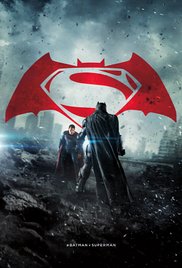
Batman v Superman: Dawn of Justice (2016): written by David S. Goyer and Chris Terrio; directed by Zack Snyder; starring Ben Affleck (Batman), Henry Cavill (Superman), Gal Gadot (Wonder Woman), Amy Adams (Lois Lane), and Jesse Eisenberg (Lex Luthor): A second viewing made me think that the movie might have been better had the entire section of Batman actually fighting Superman been excised in favour of a brief conversation between the two. I like the idea of a movie entitled Batman v. Superman that doesn't actually include a battle between Batman and Superman. 

With a nod to Chekov's gun, the Excalibur reference on the wall in the first Act goes off in the third. Hoo ha. At least it attempts to be a movie and not just another slab of Marvel Movie Product (TM). And Gal Gadot's Wonder Woman really is Da Bomb once she gets into battle. Still, it feels like Aquaman really should have showed up with that spear at the end. Recommended.

Wednesday, May 27, 2015

Tales of (Mild) Interest

Tales of Twilight and the Unseen by Sir Arthur Conan Doyle (1922) containing the following stories: The Great Keinplatz Experiment (1885); The Los Amigos Fiasco (1892); The Lift (1922); De Profundis(1892); Lot No. 249 (1892); How It Happened (1913); Playing with Fire (1900); B. 24 (1899); The Usher of Lea House School (1899); The Brown Hand (1899); The Ring of Thoth (1890); and A Literary Mosaic (1886).

This handsome reprint of a 1922 Arthur Conan "Sherlock Holmes" Doyle collection looks swell and, with large print and lavish line-spacing, is darned easy to read. And the stories themselves are mostly easy to read, even allowing for changes in general style and idiom over the last 100 years. Alas, the main problem is that Doyle's two best horror stories -- "The Parasite" and "The Horror of the Heights" -- aren't here. Neither is the suspenseful "The Brazilian Cat."

We do get "Lot No. 249," which besides possibly giving Thomas Pynchon an idea (and me an idea for a Thomas Pynchon novel about vengeful mummies and the U.S. Postal Service), also gives us a dangerous revived Egyptian mummy. Later Mummy movies would seem to draw upon the story, which is aces at build-up but not so great at a pay-off: I've seen people compare the story to M.R. James, but James would have given the world at least twice the scares at half the length.

Other stories operate as either light satire ("The Los Amigos Fiasco") or non-supernatural suspense ("The Lift"). The other notable tales of the supernatural don't really involve horror at all, though "Playing with Fire" does offer us an extremely angry supernatural unicorn (!). "The Brown Hand" and "The Ring of Thoth" are instead relatively gentle supernatural tales, devoid of threat or menace. Most of these stories were written before Doyle became a believer in the supernatural himself. Make of that what you may. 

I certainly wasn't bored while reading the stories, but most of them were very effective at lulling me to sleep when read prior to nap-time. "A Literary Mosaic [a.k.a. "Cyprian Overbeck Wells") is the true outlier here, an amusing bit of play with the style and content of writers that include Daniel Defoe, Sir Walter Scott, and Jonathan Swift. People who want to sample the supernatural, non-Sherlockian works of Conan Doyle would be better served with a 'Best of' collection that includes "The Brazilian Cat," "The Horror of the Heights," and "The Parasite." Lightly recommended.

Saturday, May 2, 2015

Holmes Vs. Evil

Gaslight Grimoire: Fantastic Tales of Sherlock Holmes (2008) edited by Charles Prepolec and J.R. Campbell, containing the following stories:

The Lost Boy by Barbara Hambly; His Last Arrow by Christopher Sequeira; The Things That Shall Come Upon Them by Barbara Roden; The Finishing Stroke by M.J. Elliott; Sherlock Holmes in the Lost World by Martin Powell; The Grantchester Grimoire by Rick Kennett and Chico Kidd; The Steamship Friesland by Peter Calamai; The Entwined by J.R. Campbell; Merridew of Abominable Memory by Chris Roberson; Red Sunset by Bob Madison; and The Red Planet League by Kim Newman.

The first of Canada's EDGE Publishing's anthologies of weird Sherlock Holmes homages is fun, for the most part, with a few stand-outs. When putting Holmes into supernatural situations, writers tend to either make Holmes a stubborn denier, regardless of the evidence, or to make his detection ethos flexible enough to admit any possibility. Sometimes writers go even further, generally by reimagining Holmes as someone who's always been a believer in the supernatural. 

The 'fantastic' herein involves a lot of stories that combine Holmes with other fictional or historical characters. Team-ups pair Holmes with Peter Pan ("The Lost Boy") , supernatural investigator Flaxman Low ("The Things That Shall Come Upon Them"), supernatural investigator Carnacki ("The Grantchester Grimoire") , and Arthur Conan Doyle's own Professor Challenger ("Sherlock Holmes in the Lost World"). Holmes also visits WW2-era Los Angeles to play a part in a horror/hard-boiled detective mash-up ("Red Sunset"). 

And it's a Holmes-homage tradition to have at least a couple of stories about cases briefly mentioned during Arthur Conan Doyle's original stories but never fully told. These references have always formed a sort of Black Casebook of Holmes adventures for later writers to imagine in their entirety. Here, "Merridew of Abominable Memory" and "The Steamship Friesland" develop these fleeting references of Doyle in unusual ways. 

Finishing the anthology is Kim Newman's blackly comic, Holmes-and-Watson-less adventure of Professor Moriarty and his right-hand man Sebastian Moran. Newman riffs on H.G. Wells's The War of the Worlds, but probably not in the way one expects. In all, an enjoyable anthology. Recommended.


Gaslight Arcanum: Uncanny Tales of Sherlock Holmes (2011) edited by Charles Prepolec and J.R. Campbell, containing the following stories:

Sherlock Holmes and the Diving Bell by Simon Clark; The Greatest Mystery by Paul Kane; The Adventure of the Six Maledictions by Kim Newman; The Comfort of the Seine by Stephen Volk; The Adventure of Lucifer's Footprints by Christopher Fowler; The Deadly Sin of Sherlock Holmes by Tom English; The Color That Came To Chiswick by William Meikle; A Country Death by Simon Kurt Unsworth; From the Tree of Time by Fred Saberhagen (1982); The Executioner by Lawrence Connolly; Sherlock Holmes and the Great Game by Kevin Cockle; and The House of Blood by Tony Richards.

The third of EDGE Publishing's series of Weird Sherlock Holmes anthologies is solid and often deadly serious as these things go. The editors pay homage to one of Holmes's finest homagists, Fred Saberhagen, by reprinting a 1982 short story featuring Holmes and his distant ancestor and sometime-ally, Saberhagen's semi-heroic version of Dracula.

The rest of the anthology is new and, for the most part, ranges from enjoyable to excellent. Stand-outs include Stephen Volk's excellent chronicle of a young Sherlock Holmes in Paris, Simon Unsworth's horror story, and Kim Newman's comic adventure of Moriarty, Moran, and six dangerous supposedly magical items. Along the way, Holmes will also visit modern-day Las Vegas, hang out with Frankenstein's Creature, and battle Lovecraftian horror and Death itself. Recommended. 

Monday, August 18, 2014

Stephen Leacock, Sherlock Holmes, Boobies

The Improbable Adventures of Sherlock Holmes: edited by John Joseph Adams (2009), containing the following stories:

The Doctor's Case (1987) by Stephen King;
The Horror of the Many Faces (2003) by Tim Lebbon;
The Case of the Bloodless Sock  (2001) by Anne Perry;
The Adventure of the Other Detective  (2001) by Bradley H. Sinor;
A Scandal in Montreal (2008) by Edward D. Hoch;
The Adventure of the Field Theorems (1995) by Vonda N. McIntyre;
The Adventure of the Death-Fetch (1994) by Darrell Schweitzer;
The Shocking Affair of the Dutch Steamship Friesland (2005) by Mary Robinette Kowal;
The Adventure of the Mummy's Curse (2006) by H. Paul Jeffers;
The Things That Shall Come Upon Them (2008) by Barbara Roden;
Murder to Music (1989)   by Anthony Burgess;
The Adventure of the Inertial Adjustor  (1997) by Stephen Baxter;
Mrs Hudson's Case (1997) by Laurie R. King;
The Singular Habits of Wasps (1994) by Geoffrey A. Landis;
The Affair of the 46th Birthday (2008) by Amy Myers;
The Specter of Tullyfane Abbey (2001) by Peter Tremayne;
The Vale of the White Horse (2003) by Sharyn McCrumb;
The Adventure of the Dorset Street Lodger (1995) by Michael Moorcock;
The Adventure of the Lost World (2004) by Dominic Green;
The Adventure of the Antiquarian's Niece (2003) by Barbara Hambly;
Dynamics of a Hanging (2005) by Tony Pi;
Merridew of Abominable Memory (2008)  by Chris Roberson;
Commonplaces (2008) by Naomi Novik;
The Adventure of the Pirates of Devil's Cape (2008) by Rob Rogers;
The Adventure of the Green Skull (2008) by Mark Valentine;
The Human Mystery (1999) by Tanith Lee;
A Study in Emerald (2003) by Neil Gaiman;
You See But You Do Not Observe (1995) by Robert J. Sawyer.

Hugely entertaining and lengthy anthology, mostly consisting of reprints, of Sherlock Holmes stories from the two decades previous to the anthology's publication. Many of the stories involve either science fiction or the supernatural, hence the 'improbable' part of the title. That itself riffs on Holmes' famous quotation, "When you have eliminated the impossible, whatever remains, no matter how improbable, is the truth."

Some stories expand upon brief mentions of unchronicled cases in the original Holmes stories by Arthur Conan Doyle ("Merridew of Abominable Memory" by Chris Roberson and "The Shocking Affair of the Dutch Steamship Friesland" by Mary Robinette Kowal both reference the original mention in their titles). Others pit Holmes against the supernatural ("The Horror of the Many Faces" by Tim Lebbon, "The Adventure of the Antiquarian's Niece" by Barbara Hambly, and "A Study in Emerald" (2003) by Neil Gaiman memorably riff on H.P. Lovecraft's brand of cosmic horror).

Writers also bounce Holmes off the works and characters of other writers ("The Things That Shall Come Upon Them" by Barbara Roden puts Holmes into a sequel of sorts to the classic M.R. James ghost story "Casting the Runes") or Doyle's own non-Holmesian works ("The Adventure of the Lost World" (2004) by Dominic Green). Mrs. Hudson and Doctor Watson get chances to solve crimes before Holmes does. Alternate worlds and science-fictional devices appear. Conan Doyle himself appears as a character. Holmes' childhood and college years are speculated upon, as is his family history. He even teams up with Stephen Leacock! In Canada!

There are a few duds here, but very few. One doesn't need to be a Holmes expert to enjoy the stories, and a concise history of Holmes included in the volume will aid those with too little knowledge of the World's First Consulting Detective. Highly recommended.


The Witchcraft Reader: edited by Peter Haining (1969) containing the following stories: Timothy (1966) by Keith Roberts; The Witch (1943) by A. E. van Vogt; The Warlock (1960) by Fritz Leiber; All the Devils in Hell  (1960) by John Brunner; From Shadowed Places (1960) by Richard Matheson; One Foot and the Grave (1949) by Theodore Sturgeon; Broomstick Ride (1957) by Robert Bloch; The Mad Wizards of Mars (1949) by Ray Bradbury.

Another of the voluminous Haining's fascinating anthologies. At his peak, he seemed to be releasing one of these a week. OK, he wasn't THAT prolific. Still, his selections are often immensely valuable because they're often way, way off the beaten path for this sort of thing.

The best character study here is John Brunner's  "All the Devils in Hell ." It's a marvelous exploration of a man in conflict with occult powers that ultimately can be opposed. Fritz Leiber's story puts a modern spin on witchcraft, while Robert Bloch's story deals with ancient witchcraft during a future era of interstellar travel. It's a solid little anthology. Also, there are naked boobies on the cover of the paperback. Huzzah! Recommended.

Monday, June 2, 2014

Detectiveness

Christine: adapted from the Stephen King novel by Bill Phillips; directed by John Carpenter; starring Keith Gordon (Arnie Cunningham), John Stockwell (Dennis Guilder), Alexandra Paul (Leigh Cabot), Robert Prosky (Will Darnell) and Harry Dean Stanton (Detective Junkins) (1983): Competent adaptation of King's horror novel never quite soars, possibly because of budgetary restrictions -- the epic car chases of the novel have instead become epic studies in stupidity, as people try to escape the homicidal car by running down the middle of the road. Because that always works so well.

The script also errs in trying to squeeze in the entire timeline of King's lengthy novel, resulting in the triumph of plot over character. Carpenter manages some nice set-pieces and one truly great image involving fiery cars and fiery bodies, and the whole thing isn't boring -- just a bit frustrating. The acting by the leads is fine, though Harry Dean Stanton is wasted as a police detective, and Robert Prosky and Roberts Blossom blow the young leads off the screen whenever they share a scene. Lightly recommended.


Zero Effect: written and directed by Jake Kasdan; starring Bill Pullman (Daryl Zero), Ben Stiller (Steve Arlo), Ryan O'Neal (Gregory Stark) and Kim Dickens (Gloria Sullivan) (1998): Jake Kasdan's first film as a writer-director is clearly a labour of love, complete with a certain self-indulgence when it comes to trimming the fat off the film.

A modern riff on Sherlock Holmes, Zero Effect follows Holmes-like Daryl Zero and his assistant Steve Arlo as they unravel a case of blackmail. Pullman does surprisingly well as the twitchy, weird Zero -- indeed, casting decisions even in 1998 would have suggested that Kasdan accidentally reversed the casting of the two leads. The result is the sort of detective movie that would have been right at home in the theatres of 1974, but which vanished without a trace in 1998. Which is too bad, because I'd have liked to see more weirdly titled cases of Daryl Zero. Recommended.

Tuesday, October 2, 2012

Dracula's Quest

Seance for a Vampire by Fred Saberhagen (1994): Saberhagen's revisionist Dracula series began in the late 1970's with the delightful The Dracula Tapes, narrated by the bloody 'Count' himself, and continued through nearly a dozen volumes before Saberhagen's death in 2007. This is the third-last of these novels, and the second to pair Dracula with his cousin (in Saberhagen's world) Sherlock Holmes.

Dracula is something of a droll narrator of events, this drollness counterpointed by sections narrated by Dr. Watson, who doesn't entirely trust his best friend's cousin. But while Dracula is a master of violence, he abides by his own code of honour in Saberhagen's universe -- and part of that code involves stopping vampires from preying on humans against their will. The events of Bram Stoker's Dracula were, after all, narrated by pretty much everyone BUT Dracula.

A seance meant to draw forth the spirit of a mysteriously drowned young woman seems to call forth instead a vampire. Holmes and Watson are on the case, but once vampirism turns up, Dracula must be called in for assistance. Soon, the unlikely trio are jaunting around the early 20th-century countryside on the trail of a vampire seeking lost treasure from more than a century before -- and wreaking vengeance on the descendants of his long-dead nemesis.

Before it's all over, we'll visit pre-Revolutionary Russia and have an encounter with one of the early 20th-century's most notorious mystery men. It's a good thing Watson packed the wooden bullets -- no metals, not even silver, have the slightest effect on a vampire. While lacking the near-epic scope of The Holmes-Dracula File, Seance for a Vampire is a fun read with some poignant moments set off by comparisons between the never-aging Dracula and Holmes and Watson, now in their fifties and beginning to show it. Recommended.

Thursday, January 12, 2012

The Hat Squad, The Trip, and The Napoleon of Crime

The Trip, directed by Michael Winterbottom, starring Steve Coogan and Rob Brydon as themselves (2011): British comedians Coogan and Brydon, playing themselves, tour some haute cuisine restaurants in Northern England for a week in service to a newspaper article Coogan has been contracted to do, comedically one-upping each other all the way. This terrifically funny movie was originally a six-part BBC miniseries, edited down here for tehatrical distribution. Along with Bridesmaids, it's the funniest movie of 2011.

Coogan plays the somewhat aloof, Byronic comedian, mocking Brydon's schtick as the Rich Little of Great Britain. Brydon plays the devoted family man who seems content to entertain through comedic mimickry. Coogan is a bit of a blowhard; Brydon is a bit socially awkward. Together, they make a great comedic duo. There's even a bit of character development, though it's wisely kept muted, without the 'big' moments that would probably occur in an American film.

One of the running competitions between the two involves trying to do the best Michael Caine imitation while also explaining how one does this, and how Caine's voice has changed over the years. Others involve James Bond imitations and various bits of jazzy riffing on assorted pop culture topics.

The food -- elegantly prepared and often hilariously precious -- also supplies moments of wit and counterpoint, especially early on when Brydon gets Coogan to admit that he actually isn't much of a foodie, and that the only critical insight he can offer about a bowl of soup is that it's very tomato-y and very soupy. I wish this were longer. Highly recommended.


Sherlock Holmes: A Game of Shadows, written by Michele and Kieran Mulroney, based on the characters created by Arthur Conan Doyle; directed by Guy Ritchie; starring Robert Downey, Jr. (Holmes), Jude Law (Watson), Stephen Fry (Mycroft), Noomi Rapace (Simza Heron) and Jared Harris (Moriarty) (2011): Guy Ritchie's Holmes is basically a twitchy Victorian James Bond with more brain power than 007. Here, Holmes must foil a massive plot by his arch-nemesis Professor Moriarty, a respected mathematics professor and political consultant who is secretly "the Napoleon of Crime."

The plot itself isn't new to Holmes pastiches and homages: Moriarty is trying to foment a World War in 1891. Oh, and Watson is getting married. Downey and Law keep it all fairly light; Stephen Fry plays Holmes's older, smarter brother Mycroft as a more politically committed Oscar Wilde; Noomi Rapace (Lisabeth Salender in the Swedish adaptation of the Millennium trilogy) doesn't have a lot to do as the only Romany fortune-teller in history with a Swedish accent, though she does look great in a variety of hats. Weightless, escapist fun with some nice set-pieces. Recommended.


The Adjustment Bureau, written and directed by George Nolfi, based on the story "Adjustment Team" by Philip K. Dick; starring Matt Damon (David Norris), Emily Blunt (Elise Sellas), Anthony Mackie (Harry Mitchell), John Slattery (Richardson) and Terence Stamp (Thompson) (2011): Hollywood tends to like Philip K. Dick for the bare bones of a plot and not much else. Dick's novels and short stories don't exactly teem with people as good-looking as Matt Damon and Emily Blunt playing characters with sexy, exotic and/or world-shaking jobs. With The Adjustment Bureau, it's as if the makers of Blade Runner had changed Rick Deckard's character from a private detective to the Man Who Would Be King of All the Popes.

So the movie-makers of this extremely loose adaptation of a ten-page Dick short story called "Adjustment Team" (loose in the sense that it makes Minority Report look like a staged reading of the Dick short story it was based on) take a basic idea that isn't entirely peculiar to Dick (vaguely magical, behind-the-scenes bureaucratic types actually decide everybody's fates down to the most minor of details if necessary -- this is the Adjustment Team, whom the movie renames the Adjustment Bureau probably simply because Hollywood screenwriters will rename or rewrite anything given half a chance, and generally fuck it up while loudly declaiming how they improved the original narrative. Stephen Zaillian, I'm looking at you and about half your adaptations).

Then they add a mushy spiritual element that is decidedly not in the original story, and have Matt Damon be a US Presidential hopeful and Emily Blunt the most important modern dance person in, like, ever. But only if The Plan is followed, shepherded by the behatted army of Adjustment fellas.

None of this works at all well with Dick's recurring focus on ordinary people in extraordinary situations, often just trying to get along. Because it's Matt Damon! The powers that be want him to be President! The Chairman, ie. God, wants him to be President!!! Who needs ordinary people in a baffling world of shifting realities when Jason Bourne is available to run like crazy at the climax?

Oh, and the various members of the Adjustment Bureau wear hats. Because hats allow them to teleport from location to location. Despite the fact that the members of the Adjustment Bureau are supernatural beings of some sort. They still have to have those hats! And their precognitive powers don't work in rain or near water. Basically, they're a really incompetent Green Lantern Corps. At least a ring can't blow off your head in a stiff breeze! At least the colour yellow doesn't cover 2/3's of the Earth's surface!

Matt Damon's fate gets screwed up because the guy micro-managing that fate, Anthony Mackie (in the unfortunate role of The Saintly, Super-powered Negro), falls asleep on the job. History will apparently fall apart if Matt Damon doesn't become President of the USA. The Adjustment Bureau apparently doesn't have back-up plans. It's all one plan, baby! Much pointless running around and stuff later, everything works out fine. The End. Not recommended.